Sustainability is not a trend and must not become something we do just for the sake of it. The Vienna Tourist Board sees sustainability as a society-wide priority that touches every aspect of daily life and business activities. We take a holistic approach to the issue by considering the interaction between people and their social environment. Sustainability cannot be purely an economic, ecological or social issue – it requires a systematic approach.
Flagship Green City
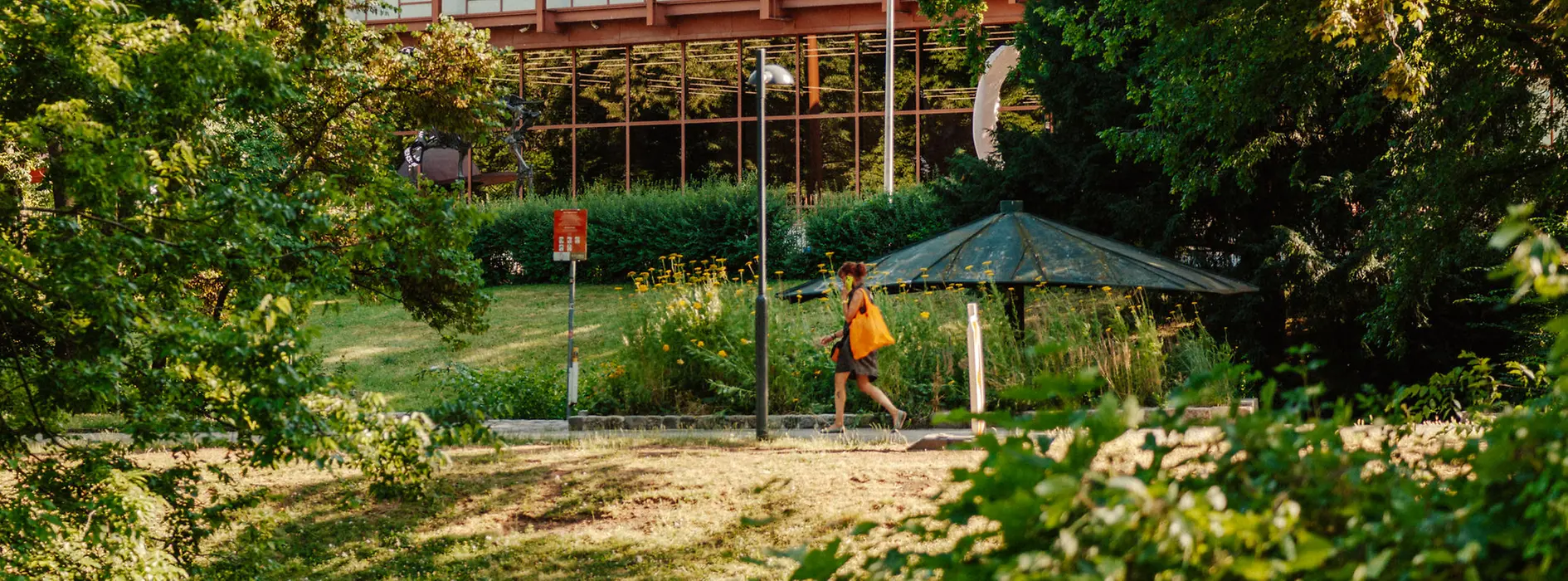
Vienna is unique among large European cities in that more than half of the city is covered in green spaces – in fact, inner-city parks and gardens dominate the cityscape. Two thirds of Vienna’s residents live less than 250 meters (five minutes) away from a publicly accessible green space. Vienna ranks among the ten best and greenest cities in Europe, according to Resonance Consultancy and Forbes. It is not for nothing that Vienna is one of the most liveable cities in the world.
Vienna has more than just green oases for relaxation – there are productive farms and vineyards here too. 15% of the city’s surface area is devoted to agriculture, of which one third is farmed organically. This is the largest proportion of organic farming anywhere in Austria. Vienna is also the only metropolis in the world to have a noteworthy winegrowing industry within the city limits. Some 700 ha are dedicated to growing Viennese wine.
The excellent air quality and outstanding water quality in Vienna are taken for granted by the city’s residents and valued highly by visitors. The water flows directly from the Styrian-Lower Austrian Alps. Free drinking water can be drunk directly from the more than 1,600 public water fountains in the city or poured into bottles for on-the-go convenience.
Vienna in a nationwide comparison
With just over two million residents, Vienna is not just Austria’s largest city but also the country’s most densely populated federal state. Approximately 22% of the country’s entire population live here. As absurd as it may sound, the capital’s inhabitants actually live more sustainably than people in rural areas. In comparison with the other Austrian states, Vienna has the lowest proportion of impervious surfaces and the lowest CO2 emissions per capita.
Viennese households use the least petrol and travel the fewest miles by car – in fact, only 38% of the people living here actually own a car.
Amount of impervious surface per capita by federal state
Impervious surface in m² per resident | |
|---|---|
| Vienna | 79 m² |
| Vorarlberg | 241 m² |
| Tyrol | 288 m² |
| Salzburg | 298 m² |
| Styria | 376 m² |
| Upper Austria | 386 m² |
| Carinthia | 435 m² |
| Lower Austria | 503 m² |
| Burgenland | 582 m² |
Table-topping Vienna: Vienna has the lowest coverage of impervious surfaces per capita
Source: ÖROK Atlas 2022
Emissions of the federal states
Greenhouse gas emissions per capita (2022) | |
|---|---|
| Vienna | 4,1 t |
| Vorarlberg | 4,7 t |
| Burgenland | 5,6 t |
| Tyrol | 6,0 t |
| Salzburg | 6,2 t |
| Carinthia | 7,1 t |
| Lower Austria | 9,0 t |
| Styria | 9,6 t |
| Upper Austria | 14,7 t |
Source: klimadashboard.at, Statistik Austria, data from 2022
The Viennese way of living together
Vienna is a cosmopolitan kaleidoscope. It is a global city that combines a variety of lifestyles, openness and mutual respect and in which diversity is a strength. Vienna is one of the most liveable cities in the world, a liberal-minded, modern, diverse and inclusive metropolis that welcomes people from across the glove in all their diversity.
Vienna is committed to quality tourism, from which everyone benefits and which places the minimal possible strain on the destination and its residents. Visitor satis- faction and the mindset towards tourism of Vienna’s locals are measured regularly, with results suggesting nine out of ten visitors would recommend Vienna as a destination. Nine in ten residents of Vienna also see tourism as a positive thing.