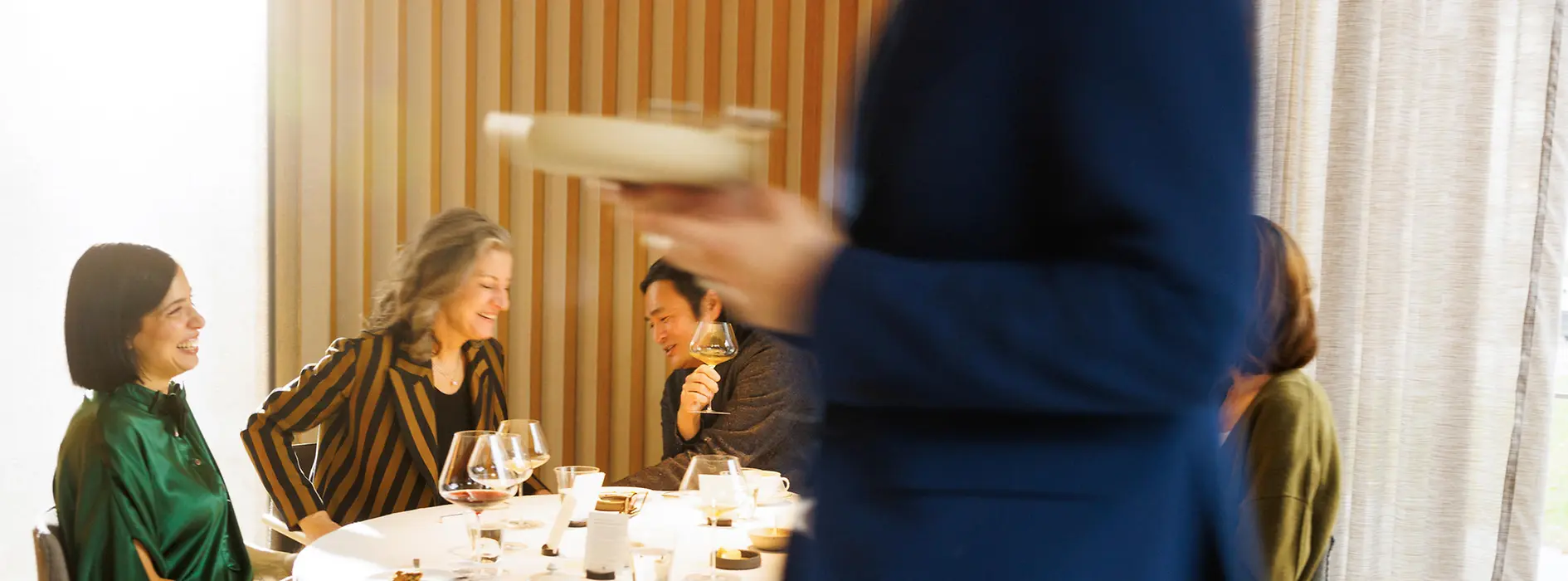
Service & Guest Support
Attentive service and individual support helps create an inclusive dining experience for all guests. Focus on the following aspects:
Core Requirements
| Guidance through service | Guide guests with visual disabilities through the dining experience with clear, attentive service and helpful descriptions. |
| Choice of tableware and cutlery | Select tableware, cutlery and glasses that are stable, ergonomic and intuitive to use. |
| Plating and serving | When plating and serving, consider the needs of guests with limited hand mobility or motor disabilities. |
Practical Tips
| Stable glasses | Use or offer stable glasses that are less likely to tip over. Avoid using stemmed wine or sparkling wine glasses. This helps prevent spills for people with limited hand mobility or visual disabilities. |
| Drinking aids | Keep straws available and offer them where helpful. This can make drinking easier for people with mobility disabilities. |
| Adapted cutlery | Provide cutlery with larger or thicker handles where useful. This improves handling for people with reduced grip strength. |
| Support while eating | Communicate clearly that dishes can be cut up in the kitchen on request. This supports independent eating for guests with motor disabilities. |
| Plates with a rim | Use plates with a rim. This makes it easier to pick up food for guests with reduced fine motor control or visual disabilities. |
| Hot drinks | Do not fill hot drinks to the brim. This helps prevent burns, particularly for guests with unsteady hand movements. |
| Describing dishes | For guests with visual disabilities, clearly describe the position of items on the table and food on the plate (for example using the clock-face method) This helps blind guests enjoy their meal independently. |