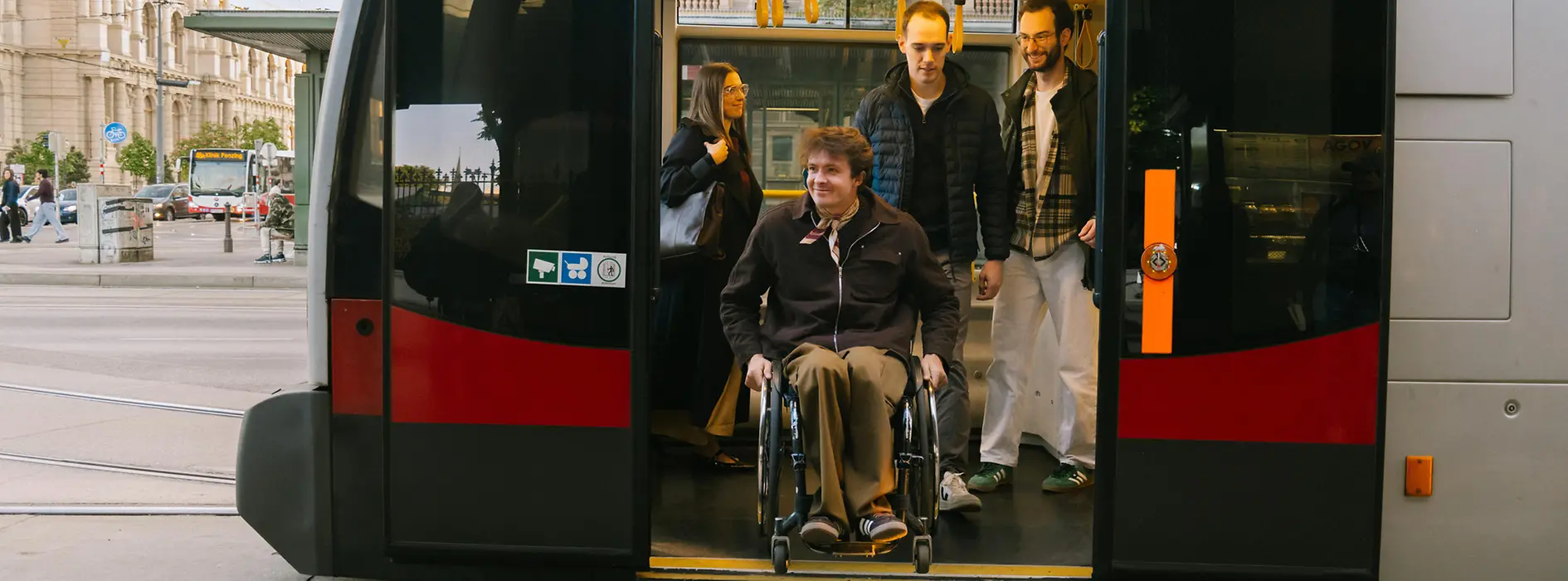
Mobility Disabilities
Mobility disabilities can affect a person's ability to move, walk, stand, or perform fine motor tasks. Many people use mobility devices such as wheelchairs, walkers, or canes to move around as independently as possible.
Practical Tips
| Ensure accessibility | Where possible, tables, counters, and surfaces should be wheelchair-accessible and easy to reach. Controls and surfaces should ideally be positioned no higher than 110 cm. |
| Offer assistance repectfully | Assistance can be offered proactively but should never be provided without the person’s consent — for example, by pushing a wheelchair. A wheelchair is a personal mobility device and an extension of a person's independence, comparable to glasses for someone with a visual disability. Pushing without consent can not only feel intrusive but also create safety risks, such as tipping. Always ask first and provide assistance only with the person’s consent. |
| Use flexible service areas | If the regular reception area is difficult to access, use alternative spaces such as lounge, foyer, or café areas for conversations or check-in processes. These settings allow for more comfortable, respectful conversations, create a more relaxed atmosphere, and help avoid barriers such as high check-in terminals or hard-to-reach counters. |
| Provide accessible writing surfaces | Clipboards or portable writing surfaces make it easier to complete forms when no suitable table is available. |
| Make controls easy to reach | Door handles, light switches, ordering terminals, and user interfaces should be easy to reach and simple to operate. Assistive tools such as reachers can be made available on request. |