
Hearing Loss & Deafness
Hearing loss ranges from mild hearing loss to complete deafness and is especially common in older people. Challenges arise when important information is communicated exclusively through sound, for example during check-in, announcements, or safety instructions.
Practical Tips
| Maintain direct eye contact | Lip movement, facial expressions, and body language can support spoken communication. |
| Speak clearly | Speak slowly and clearly, but without exaggerating. This gives the guest more time to understand what is being said. |
| Offer written communication | Where needed, provide important information in writing, either on paper or digitally. This makes it easier to convey more complex information. |
| Use visual alerts | Safety-relevant information, such as fire alarm systems, should be supported by visual alert signals such as strobe lights. |
Technical Support for Guests with Hearing Aids — Hearing Loops
A hearing loop (also known as an induction loop) is an assistive listening system for people who use hearing aids or cochlear implants. It transmits audio and speech information wirelessly, for example during personal consultations, in cinemas, theatres, or at events. The signal is transmitted directly to the hearing aid, eliminating distortion and interference from background noise or room acoustics.
Sign indicating the availability of a hearing loop:
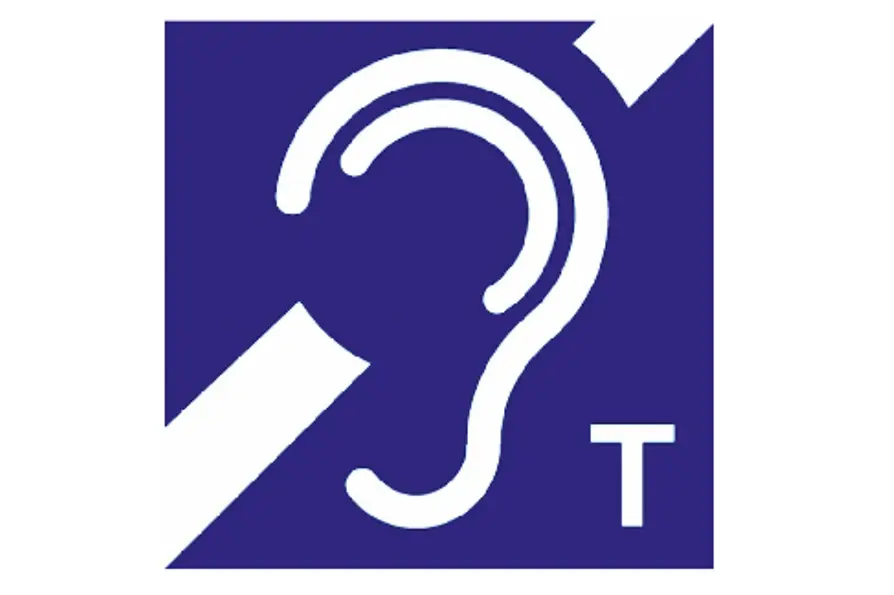
© Induktionsschleife.at
| Check compatibility | To use a hearing loop, the guest’s hearing aid or cochlear implant must have a so-called T-coil. Where relevant, confirm whether the guest’s device supports this function. |
| Test the transmission | Many hearing aids allow individual volume adjustment. Before a conversation or consultation begins, briefly check whether the transmission is clear and easy for the guest to understand. |
| Be aware of range | Hearing loops have a limited range. Transmission typically works within an area of approximately one to five meters around the system or along the installed loop. |
| Avoid interference | Large metal objects or electronic devices can affect the magnetic field. Where possible, avoid obstacles that may interfere with transmission between the system and the hearing aid. |
| Make the system visible and train staff | A clearly visible symbol lets guests know that a hearing loop is available. It is also helpful for staff to be familiar with how the system works and to feel confident using it in day-to-day service situations. |