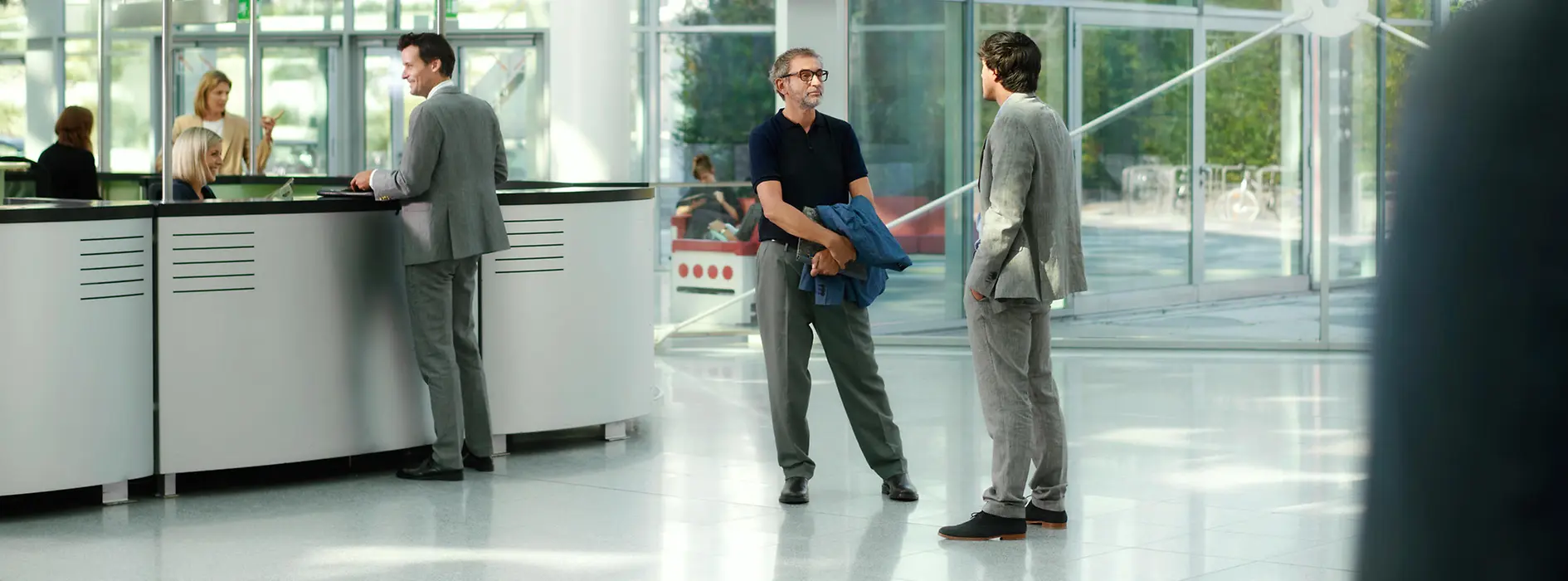
Events must be accessible not only physically but also acoustically and visually, so that all guests can participate.
Core Requirements
Seating
Integrate wheelchair spaces into the regular seating layout — not positioned separately
Hearing support
Provide and clearly mark an induction loop
Lighting
Bright, even, and glare-free, adapted to the room size
Access
Make the stage or podium accessible
Practical Tips
Plan seating flexibly
Reserve at least 1% of seats as wheelchair spaces in different areas of the room — not isolated or in the back row. A companion should always be able to sit directly alongside.
Increase comfort
Provide additional chairs with armrests. These make sitting down and standing up easier and are appreciated by many guests.
Make hearing loops visible
Display the induction loop symbol prominently (at the entrance, on the website) and test the system regularly. For temporary events, keep portable loop systems available as an alternative.
Ensure good intelligibility
Ensure sufficient, glare-free lighting. This supports lip-reading and improves orientation in the room.
Use technology consistently
Use microphones even in smaller groups. This improves speech intelligibility for everyone and is essential for deaf guests.
Plan for interpreters
At public events, designate a suitable position with good visibility for sign language interpreters and offer this service proactively where needed.
Ensure accessible access
If steps lead to the stage, offer alternative solutions such as ramps or mobile platforms and coordinate with speakers in advance.