Deep Dive: Dining Without Sight
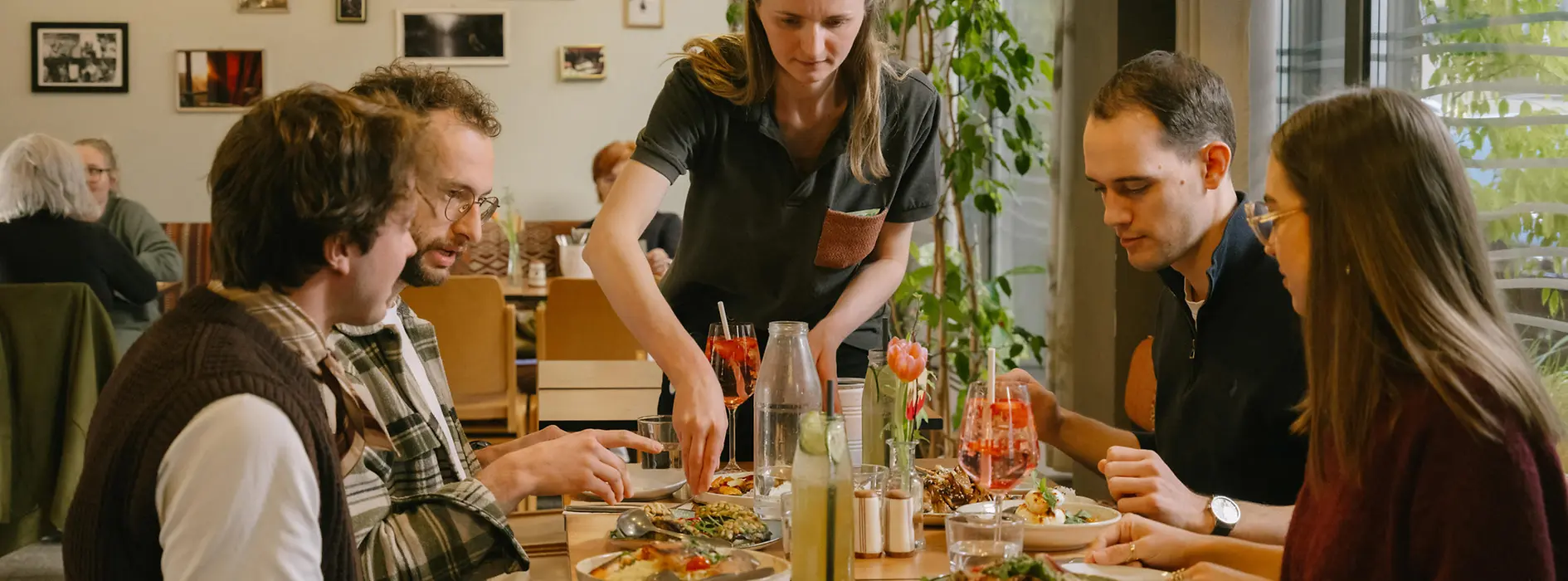
Dining out is a multisensory experience shaped by light, colour, eye contact and the visual presentation of dishes. For blind guests and guests with low vision, this visual layer is entirely absent. What remains is sound, smell, touch, temperature and, above all, the way service staff interact with them.
Moritz Huth can tell the difference between a good wine and a good business. As a certified sommelier, part of the Huth Gastronomie family business and a blind guest, he knows both sides of the table first-hand. For his bachelor’s thesis, he examined restaurants in Vienna in detail. The result is clear findings, direct recommendations and the conviction that inclusion is not a question of effort.
Quick Wins
Measures that can be implemented right away
Provide the menu in a digital format that works with screen readers
Menus shared as image files or unstructured PDFs are effectively unreadable for screen readers. An accessible text version on the website creates access before guests even arrive at the restaurant.
Add tactile markings to QR codes at the table
Guests who cannot see the QR code cannot scan it independently. A tactile border, for example raised stickers or foam markings at the corners, makes digital menus easy to use for blind guests.
Approach guests proactively instead of waiting
Blind guests cannot make eye contact or wave to attract attention. Service staff who regularly come to the table on their own initiative and actively ask whether anything is needed help prevent disorientation and stress.
Always speak directly to the blind person
Not to the accompanying person. Not over the blind person’s head. Direct communication is not a minor detail. It is a matter of dignity.
Describe the plate using the clock-face method
Explaining the position of food on the plate using an imaginary clock face, for example “meat at 6 o’clock, vegetables at 12 o’clock”, saves guests from having to explore the plate by touch and supports independent dining.
Briefly announce every action at the table
Placing a glass, refilling a bottle, clearing a plate – verbalising these actions briefly gives guests control over their immediate surroundings and helps avoid unexpected touch.
What Research shows
Three Key Areas
Digital access shapes the experience before the visit begins
Barriers do not start at the restaurant door. They start on the smartphone. Guests who cannot read a menu in advance may decide not to come at all. Blind guests use digital information beforehand so they do not have to choose “the first available option” under social and time pressure at the venue. A website that works with screen readers is therefore not a technical detail. It is the digital front door.
Staff can be the main barrier or the main bridge
The study identifies two clearly distinct guest types. Guests who travel alone and rely on structure, referred to as Type A, need proactive support from staff because without active interaction they can quickly feel overlooked. Guests who are accompanied and place particular importance on dignity, referred to as Type B, react especially sensitively when staff speak only to the sighted companion. This behaviour is perceived as a profound loss of autonomy.
What both types share is this: a single negative service moment can overshadow the entire experience, regardless of how good the food was. Research describes this as the peak-end rule, where memories are shaped disproportionately by the high points and low points of an experience.
Acoustics are not a comfort issue. They are an accessibility issue
What creates a lively atmosphere for sighted guests can become a physical barrier for blind guests. Because auditory cues replace missing visual orientation points, excessive noise levels can cause disorientation and sensory overload. A considered acoustic environment, including sound-absorbing materials, soft textiles and subtle background music, is not a comfort feature for this guest group. It is a prerequisite for accessible participation.
What businesses can change in practice
Digital:
Integrate the menu on the website as accessible, structured text
Add tactile markings to QR codes at the table, for example raised stickers or a foam border
Avoid menus provided only as image files or unstructured PDFs
Service:
Raise awareness among service staff that blind guests cannot wave for attention
Introduce the clock-face method as a standard for describing the arrangement of food on the plate
Briefly verbalise every action at the table
Always speak directly to the blind person, never over them
Space and atmosphere:
Use sound-absorbing materials and soft textiles
Position a clear point of contact at the entrance
Create tactile orientation points, for example a distinctive object near the entrance
Ensure strong colour contrasts between walls and floors for guests with residual vision
Avoid wobbly or unstable furniture
Accessibility in gastronomy
A Process, not a Fixed State
The findings make one thing clear: inclusion in gastronomy extends far beyond structural measures. It begins in the digital space, continues in staff behaviour and reaches into spatial design. No business needs to implement every measure at once. What matters is the underlying approach. Businesses that understand accessibility as an ongoing process and act step by step create real added value for guests and for their own operations.
This article is based on the bachelor’s thesis Blind Dining: How Atmosphere, Service and Food Shape the Perception of Blind Guests in Vienna’s Gastronomy Sector by Moritz Huth (FH Wien der WKW, 2026, Tourism Management degree programme).