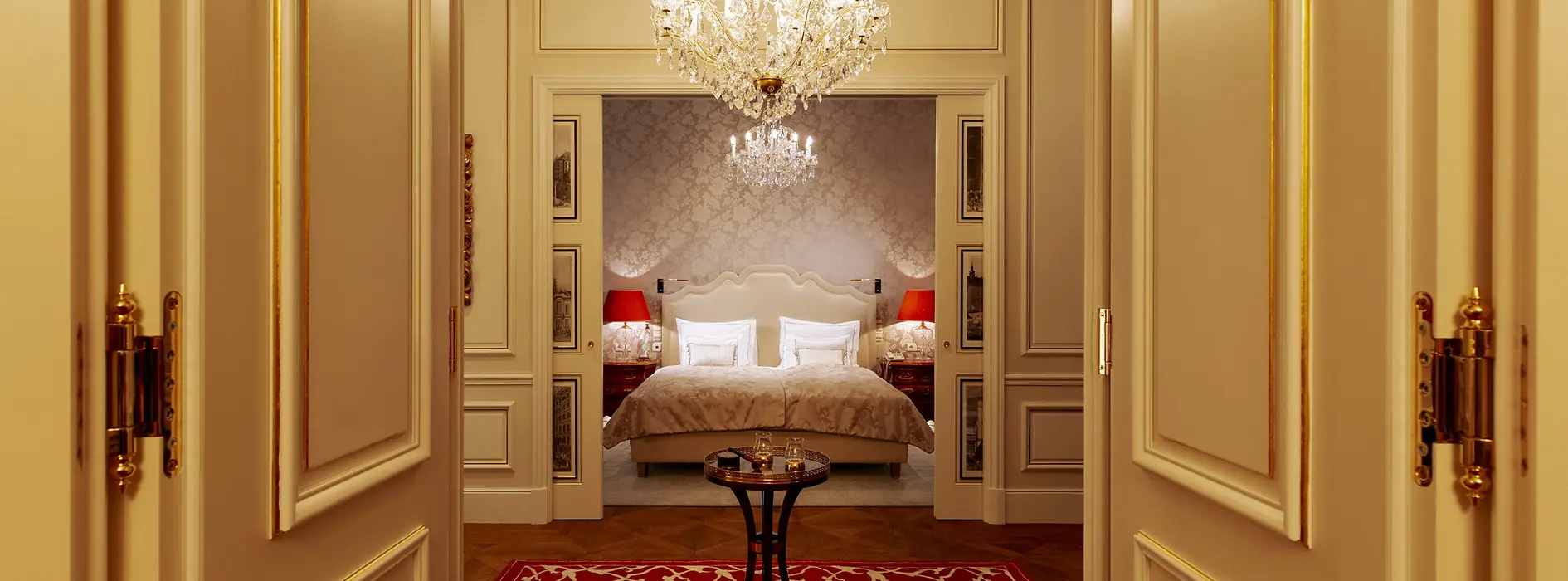
Room Layout & Furnishings
A well-designed room creates the basis for an independent and comfortable stay. Key factors include sufficient maneuvering space, controls that are easy to reach, and furnishings that can be dapted flexibly to different needs.
Core Requirements
| Maneuvering space | Plan a minimum, turning diameter of 150 cm next to the bed, in front of wardrobes, and at all access points. |
| Operating heights | Position controls such as light switches, outlets, and clothes rails at a height of 80–110 cm. |
| Tables and desks | Design tables and desks so they can be used by wheelchair users, with at least 70 cm of knee clearance. |
| Bed | Seat height of 45–50 cm, ideally height-adjustable. |
| Doors | Easy to operate, with a maximum opening force of 25 N. |
| Information | Provide the room directory and in-room information in accessible formats. |
Practical Tips
| Selection of assistive tools | Provide a flexible selection of assistive tools and offer them proactively instead of fully equipping every room. This allows guests to adapt the room to their needs. Examples include a shower stool, bath board, raised toilet seat, clip-on grab bars, non-slip mat, reacher, light alarm clock, and vibrating pillow. |
| Internal overview | Keep a list of available assistive tools for reception and housekeeping. This ensures staff know what is available and where it is stored. |
| Room check | Check the room before arrival to ensure clear maneuvering space and functioning equipment. Is the maneuvering space clear? Is there no luggage rack in the way? Are all grab bars securely fixed? Does the shower seat work? Are all requested assistive tools available? |
| Optimize doors | Reduce the opening force and adjust the closing speed. Set the opening force to a maximum of 25 N and reduce the closing speed. This enables wheelchair users and guests with limited arm strength to operate the door independently. |
| Accessible information | Make the room directory accessible: use large print, good contrast, plain language, and also provide the information digitally in an accessible format. |
| Orientation in the room | Do not move furniture or objects during the stay. This supports independent orientation for guests who are blind or have low vision.. |
| Outlets | Provide sufficient outlets at a height of 40–85 cm. Extension cords can be used if no renovation is planned. Outlets near the bed are especially important for charging medical devices. |
| Reachable from the bed | Make the telephone, lights, and emergency call reachable from the bed. This helps guests with mobility disabilities feel safe and enables them to request help easily. |
| Assistance dogs | Welcome assistance dogs and provide suitable equipment (water bowl, dog blanket or dog bed). |
| BILD |
Recommended basic set of assistive tools
Shower stool or shower chair
Bath board
Raised toilet seat
Mobile grab rails (clip-on or suction systems)
Non-slip mats
Grabber
Light alarm clock
Vibration pillow