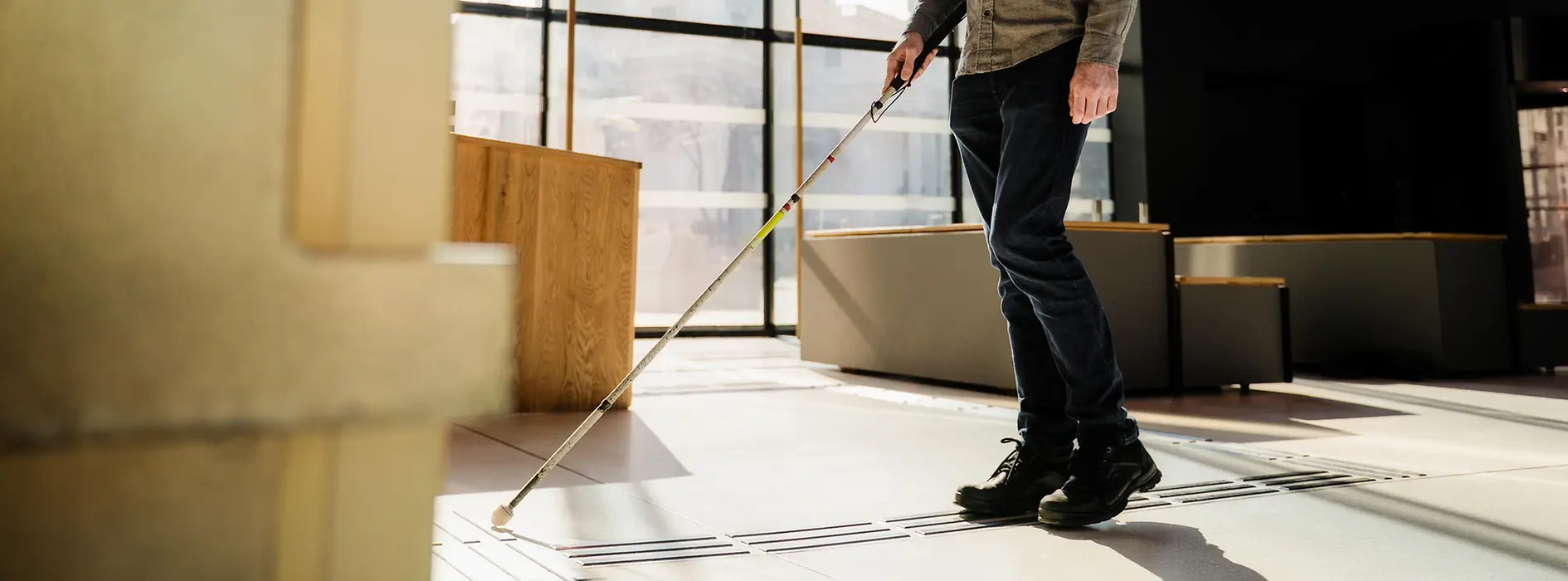
Blindness & Low Vision
Visual disabilities vary widely, from restricted field of vision or age-related vision loss to complete blindness. Not every visual disability is immediately apparent. For affected guests, visual information is often only partially accessible and needs to be supplemented by clear verbal guidance or other ways to support orientation.
Practical Tips
| Actively offer assistance | If a guest appears to have a visual disability, a friendly approach and an offer of assistance can make orientation much easier. |
| Give clear and specific directions | Describe directions as concretely as possible, using distances or positions ("two steps ahead of you", "to the right of the door"). Avoid relying solely on visual references. |
| Offer | Never touch or guide a person without asking first. Instead, offer your elbow so the person can take it independently. This preserves their sense of orientation and makes it easier to perceive movements such as steps or changes in direction. |
| guidance correctly | |
| Allow time for assistive technology | Using assistive technology, such as screen readers or smartphones, may take additional time. A calm pace and patience make the situation easier for everyone involved. |