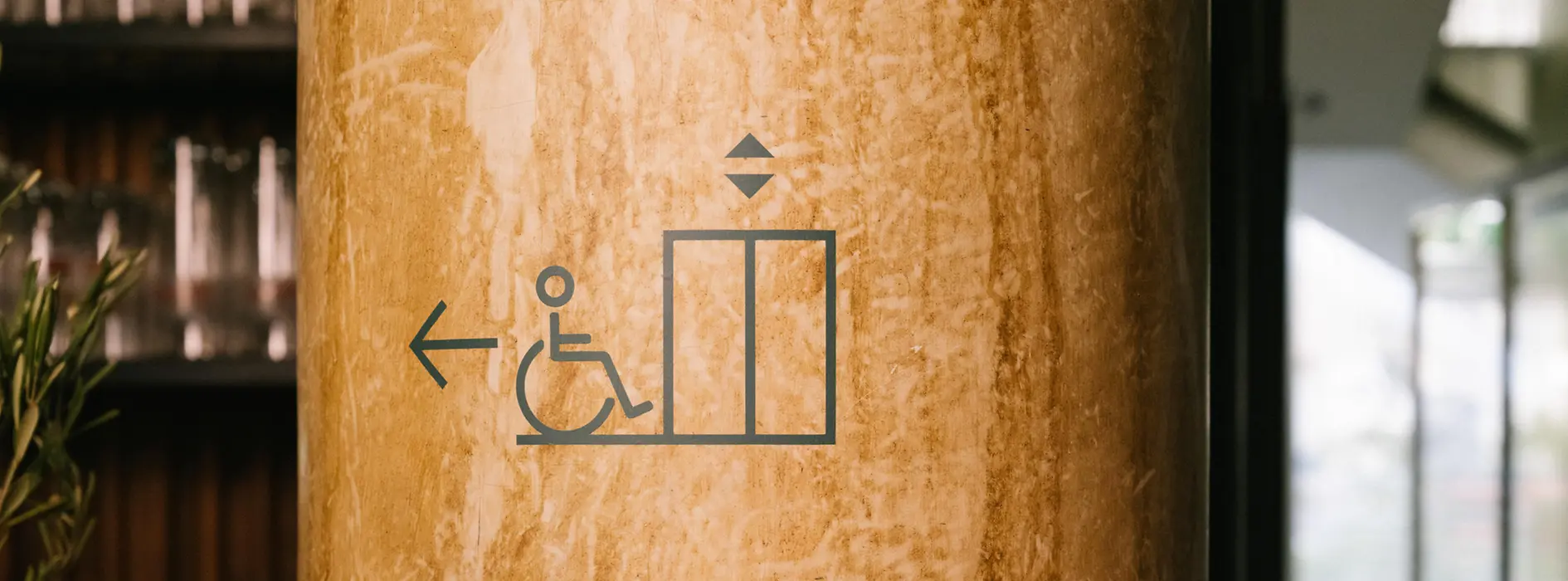
Wayfinding & First Orientation
A well-designed wayfinding system helps guests navigate a building. High-contrast colors, clear signage, and a continuous carpet runner can serve as simple and effective wayfinding tools. The following aspects should be considered to make first orientation easy for everyone.
Core Requirements
| Information in multiple formats | Provide information visually, tactilely, and/or audibly |
| In-building orientation | Make key areas such as reception, restrooms, elevators, and emergency exits easy to find |
| High-contrast design | Use strong contrast for signage, wayfinding elements, and furnishings |
Practical Tips
| Signage | Keep signage clear and uncluttered. Use large text, plain language, and strong light-dark contrast. This helps guests with visual disabilities and cognitive disabilities and improves overall orientation. |
| Tactile and visual elements | Complement text with tactile and visual elements, such as raised lettering (pyramid script), pictograms, and symbols. This makes information more accessible for blind guests and guests with reading difficulties. |
| Floor guidance systems | Use carpet runners or color-contrasted flooring along main routes. These can serve as both visual and tactile wayfinding aids for guests with visual disabilities. |
| Lighting | Check that lighting is bright enough, is free from glare, and evenly distributed. This supports guests with visual disabilities and helps prevent sensory overload for neurodivergent guests. |
| Clear pathways | Keep circulation routes free from obstacles such as plants and advertising boards. This prevents trip hazards for blind guests and ensures clear passage for wheelchair users. |