Vienna Press Information – June 2026 Trees and modern cooling technology for Vienna’s urban climate
Trees in the city
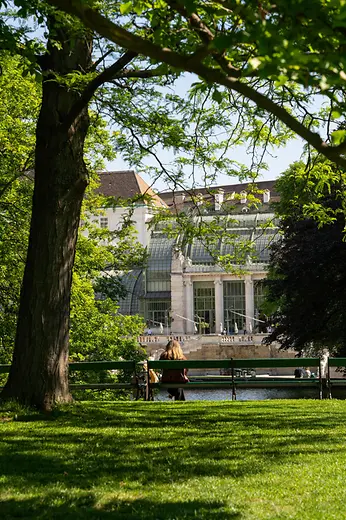
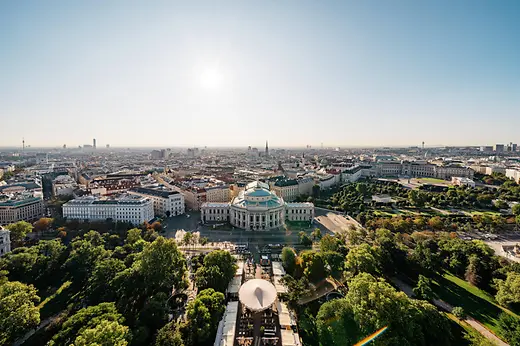
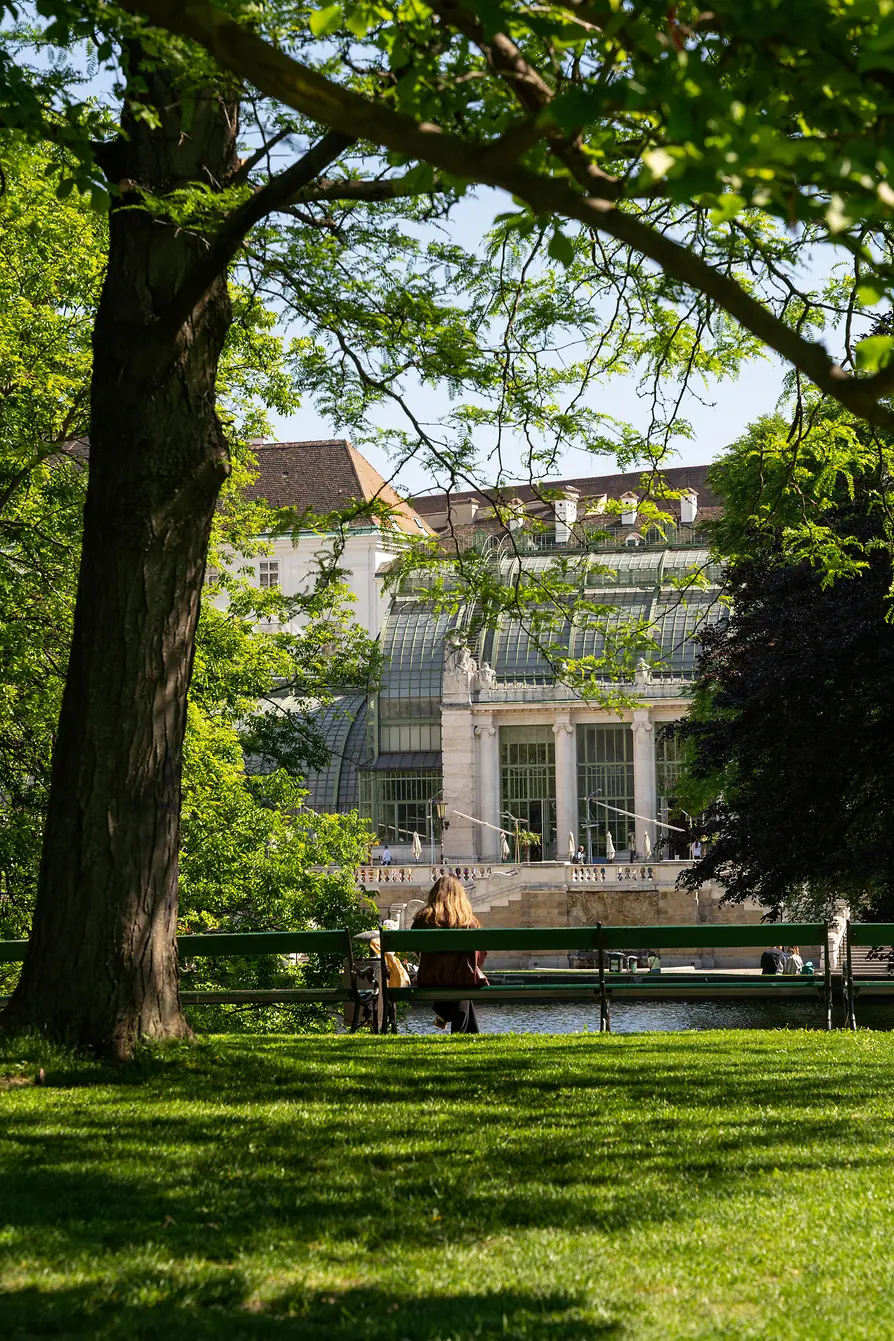
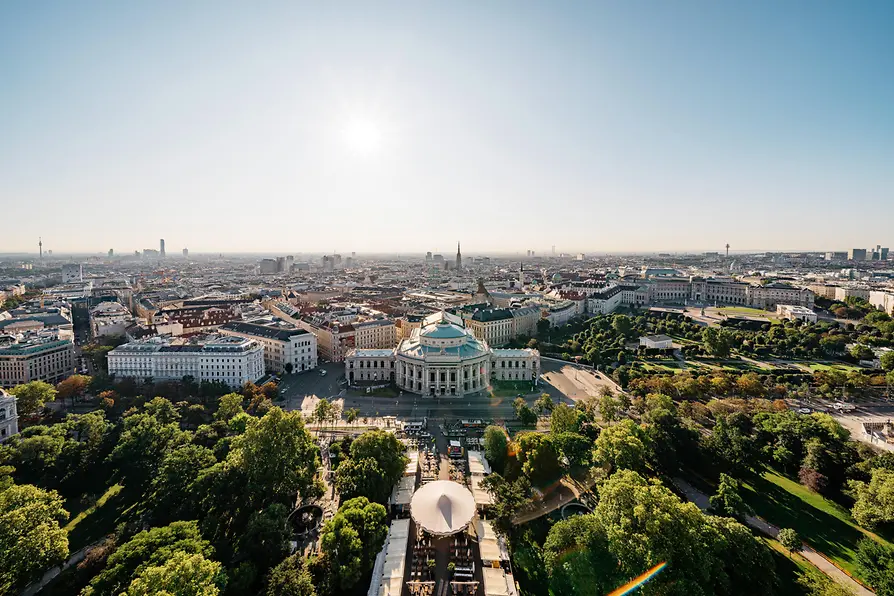
By European standards, Vienna is one of the greenest major cities. Around half of the city’s area consists of green space, including the Vienna Woods in the west, the Lobau with its riparian forests in the east, and more than 1,000 parks throughout the city. These large-scale green structures are complemented by urban recreational areas such as the green Prater and the Lainz Game Reserve. These spaces are not merely places of retreat; they are also key elements in regulating the urban climate.
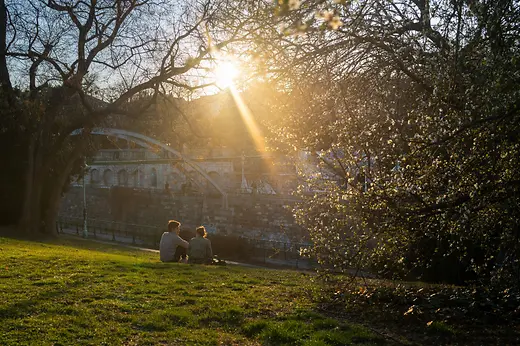
As climate change progresses, urban trees are becoming even more important. Sealed surfaces, dense development, and additional heat sources such as traffic create what are known as urban heat islands. Streets and squares in inner-city areas, in particular, can heat up significantly, while nighttime cooling is increasingly limited. Trees actively counter these developments: through shade and evaporation, they can lower the local ambient temperature by several degrees Celsius and help reduce heat stress.
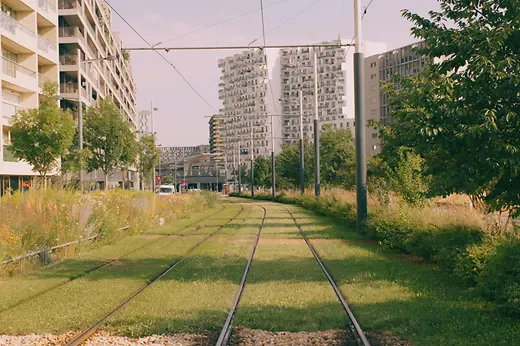
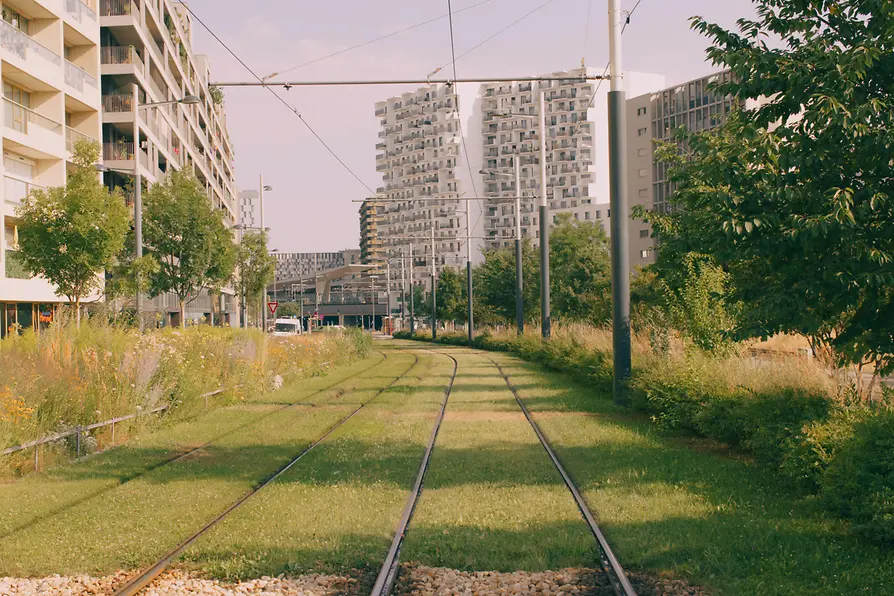
The City of Vienna is responding with a comprehensive strategy to strengthen green infrastructure. In addition to targeted tree planting, the city is also promoting green roofs and façades, as well as measures to unseal paved surfaces. The aim is to further develop Vienna as a climate-resilient city and safeguard quality of life in the long term Under the “Raus aus dem Asphalt” program — literally, “out of the asphalt” — measures are being implemented in all districts to upgrade streetscapes, create new green spaces, and reduce existing heat islands.
Protecting existing trees also plays a central role. Through Vienna’s Tree Protection Act and a comprehensive tree register, the city’s stock of around 480,000 trees is documented and legally protected. The Vienna City Gardens department continuously evaluates and updates its range of street trees. It currently consists of 25 heat-tolerant tree varieties. That means these trees are better able to cope with higher temperatures. Across Vienna as a whole, up to 150 tree varieties can be found across different genera and species. At the same time, new concepts such as the sponge city principle are gaining importance, helping to store water more effectively in urban areas and provide trees with a reliable long-term supply. Trees are therefore not simply part of the city; they are an active component of the urban climate system. Their impact unfolds gradually, but sustainably. Every newly planted tree is an investment in the future: in shade on hot days, cleaner air, and an urban climate that keeps Vienna livable for the long term.
1,800 public drinking fountains
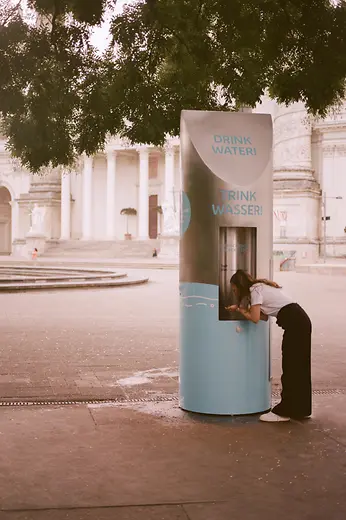
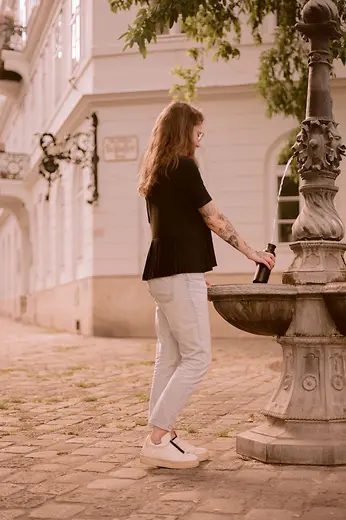
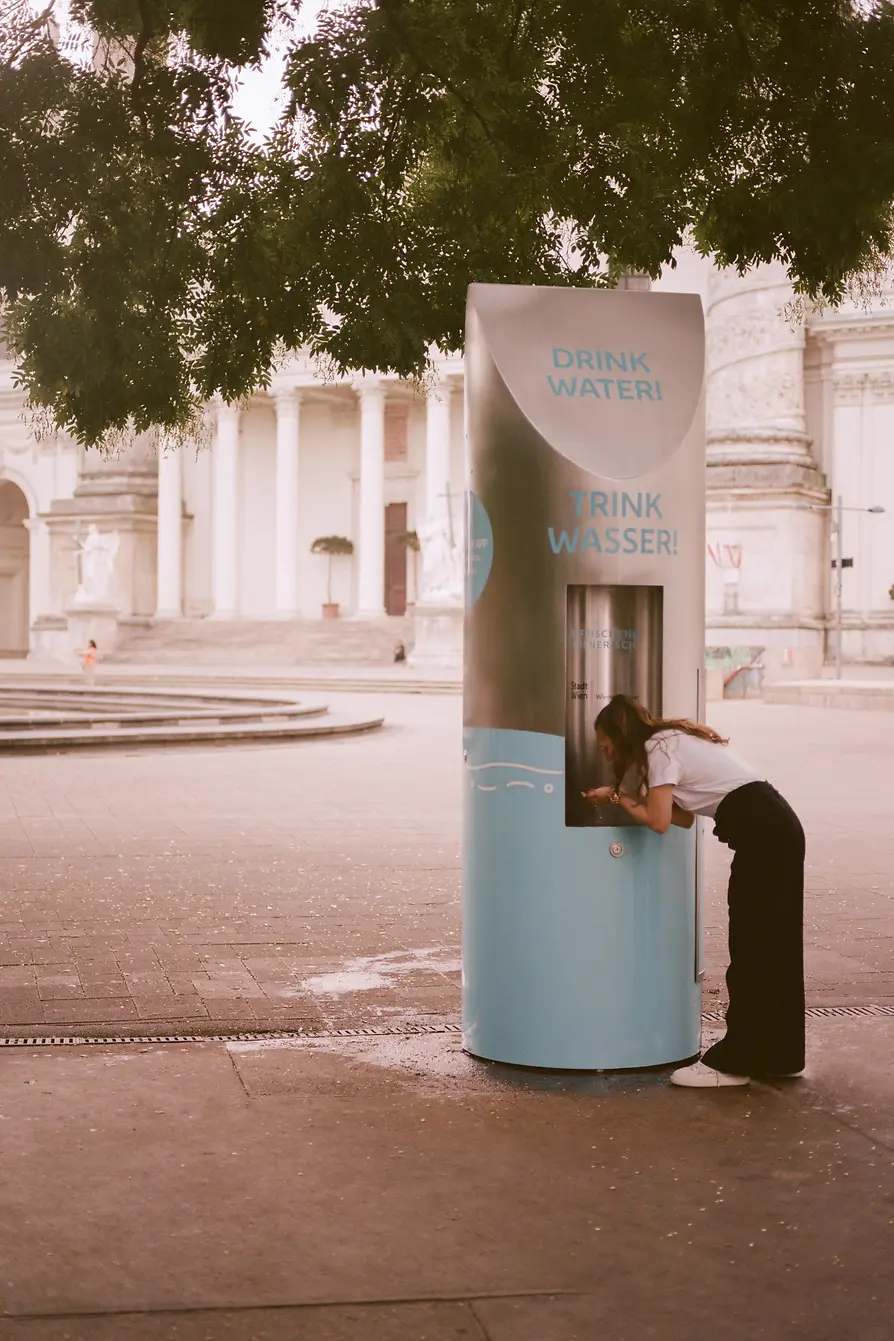
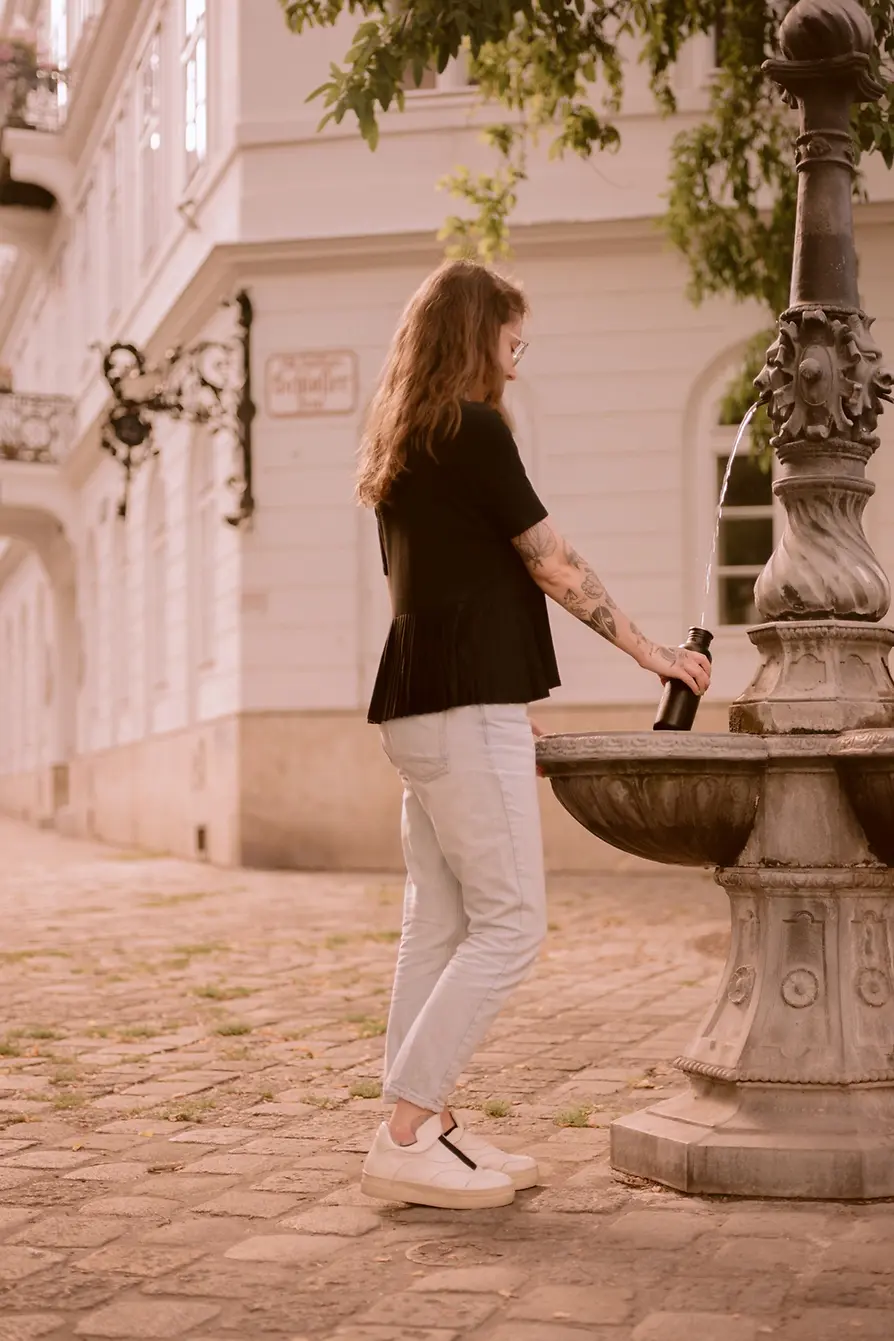
Numerous public drinking fountains throughout the city offer refreshment throughout the day. With 1,800 drinking fountains, Vienna has more public drinking fountains than all of Germany combined, which had 1,500 as of 2025. The scale of Vienna’s network also stands out in comparison with other cities. With 90 drinking fountains per 100,000 residents, Vienna has one of the highest densities of public drinking fountains in the European Union. Paris, by comparison, has 59 per 100,000 residents, while Berlin has 6. New drinking fountain locations are being developed primarily in urban expansion areas and as part of the redesign of squares and streets.
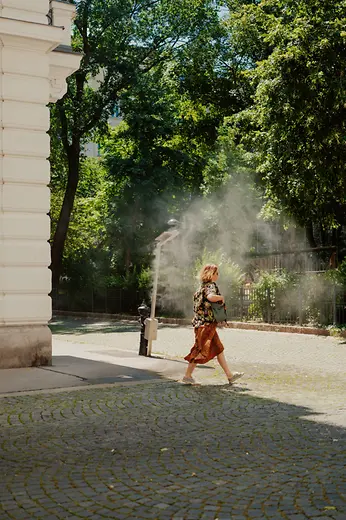
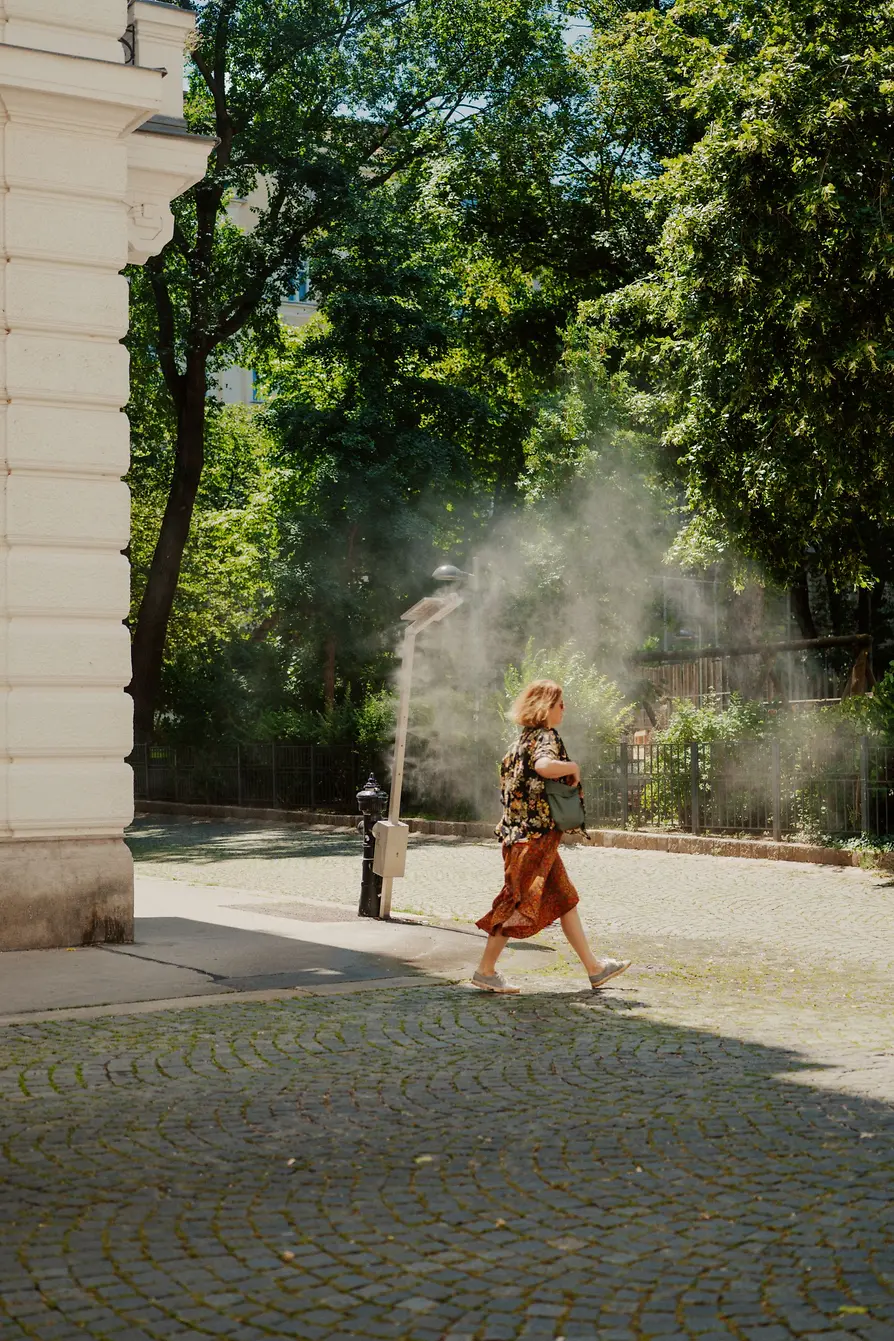
Especially in summer, public drinking fountains and the city’s 75 “Brunnhilden” — fountains with misting spray activated at the touch of a button — make an important contribution to cooling and refreshment. In addition, there are 100 “Sommerspritzer,” misting columns attached to hydrants. These automatically release cooling mist during the hottest hours of the day.
Cooling for the future: Vienna invests in district cooling
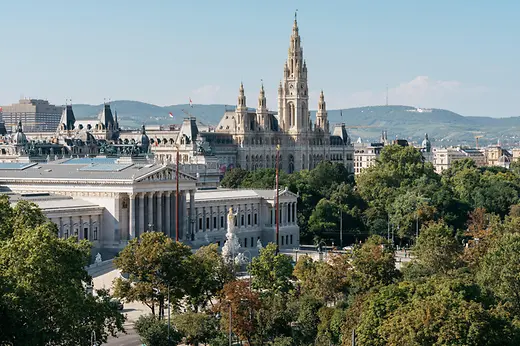
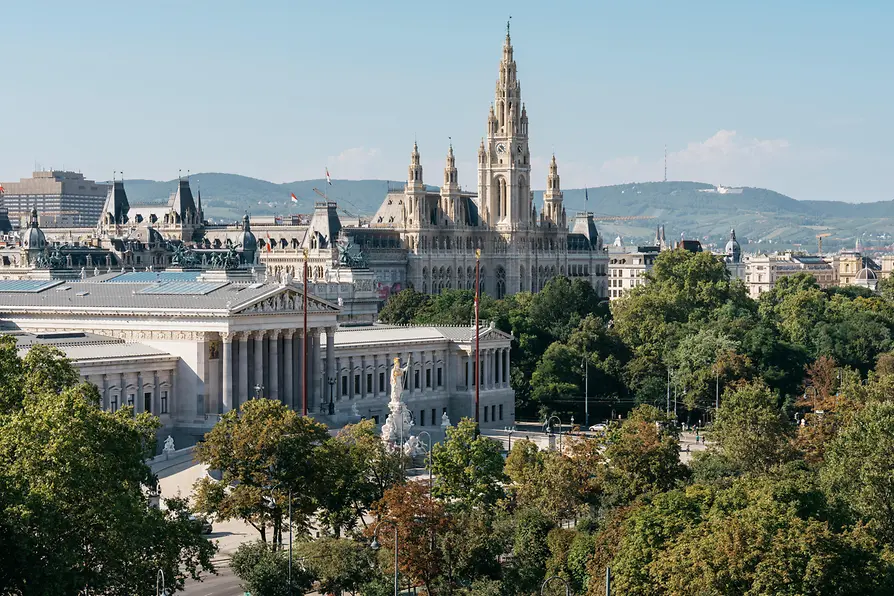
Vienna also operates one of the most advanced district cooling systems in Europe. Twenty-five cooling sites are currently in operation, including eight high-performance, energy-efficient district cooling centers connected to the district cooling network. More than 220 buildings are already supplied, including public institutions, cultural venues, hotels, and energy-intensive facilities such as data centers and large-scale kitchens. The network comprises around 30 kilometers of pipelines and is being continuously expanded. One central element is the approximately 4.7-kilometer district cooling ring beneath the Ringstrasse, which connects prominent buildings along Vienna’s Ring, including the University of Vienna, City Hall, Parliament, the Vienna State Opera, the Museum of Applied Arts, the Ronacher theater, and the Hotel Sacher.
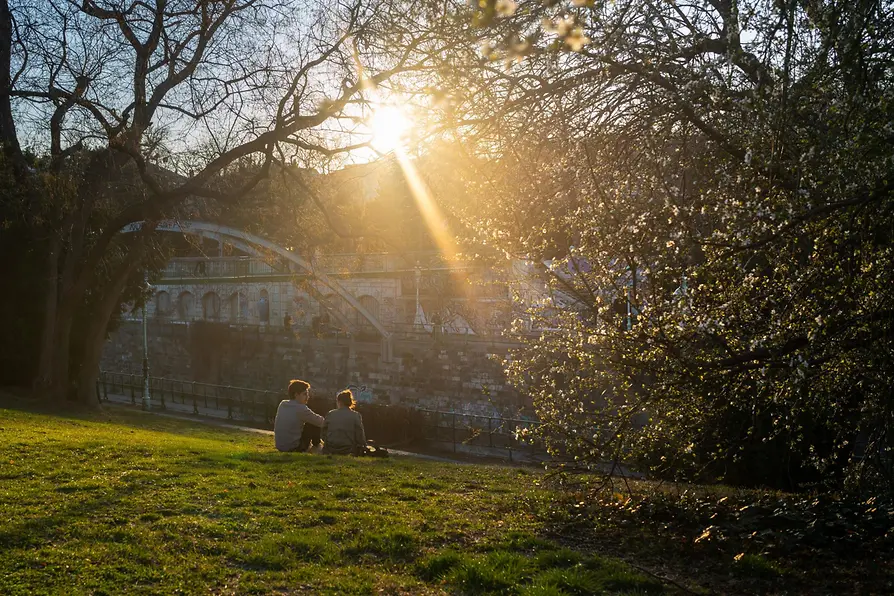
The Schottenring cooling center alone can cool a total of 400,000 square meters of floor space. Buildings are cooled via specially installed cooling systems using water. The warmed water then flows back to the cooling center, where it is cooled down again and returned to the cycle. Depending on availability, the systems are recooled using river water or cooling towers. Water from the Danube Canal, for example, can be used via intake structures. Especially during cooler months, lower water temperatures can significantly reduce the need for energy-intensive cooling machines.
In response to rising heat stress, Vienna is now systematically expanding its cooling infrastructure. The work includes maintenance, the replacement of older units, and increases in system capacity. At individual locations, including Schottenring, existing systems are being replaced with more powerful and efficient equipment. In total, Vienna is investing around 90 million euros in the expansion and modernization of district cooling. The goal is to increase capacity from the current level of around 240 megawatts to approximately 370 megawatts by 2030.
District cooling has long been more than a summer comfort system. It is year-round infrastructure. Hospitals such as Vienna General Hospital, event venues, office buildings, and data centers depend on stable cooling capacity at all times, regardless of the outside temperature.
As the number of hot days and tropical nights continues to rise, the city’s cooling needs are growing steadily. District cooling helps reduce this burden, absorb peak electricity demand, and ensure that urban spaces remain functional even under extreme conditions.
More information:
Information on Vienna’s tree assortment: https://www.wien.gv.at/umwelt/baumsortiment
Drinking fountains and mist showers: https://wien.orf.at/stories/3349606/
District cooling: https://www.wienenergie.at/ueber-uns/unternehmen/energie-klimaschutz/energieerzeugung/fernkaelte/
Tours of the Spittelau district cooling plant: https://www.wienenergie.at/privat/erleben/standorte/fernkaelte-zentrale-spittelau/
Download print-ready version
Download print-ready version
Download print-ready version
Download print-ready version
Download print-ready version
Download print-ready version
Download print-ready version
Download print-ready version
Contact
Helena Steinhart
Team Manager
+43 1 211 14-364
helena.steinhart@vienna.info