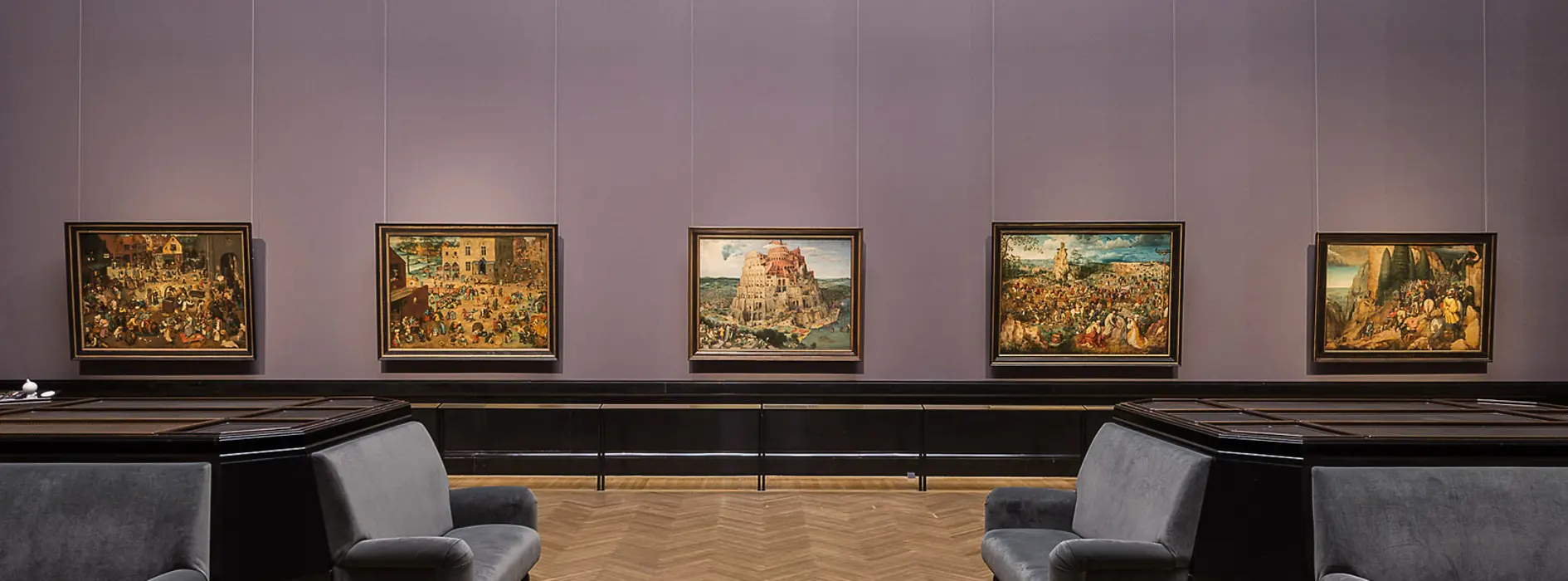
Best Practice: Structural Accessibility & Heritage Conservation
A museum with 135 years of history, an imperial legacy, and around 532 members of staff faces a complex task: becoming accessible without damaging a protected monument. With the “Remastering KHM” project, the Kunsthistorisches Museum Wien shows how an accessible renovation can succeed in a listed building, and what other businesses can learn from it.
Quick Wins
Measures That Can Be Implemented Right Away
Communicate accessibility transparently on the website
Name existing limitations openly, such as the lack of step-free access at the main entrance or restricted access to certain areas.
Review and adapt internal procedures
Improvements are often possible without structural work: who supports visitors with limited mobility? Which staff members know the accessible route? Clear internal responsibilities make the difference.
Designate an accessibility officer
A dedicated person responsible for accessibility creates accountability, both for the team and for visitors who are looking for a specific point of contact. The KHM established this role in August 2025.
Seek expert input early
Businesses planning a renovation should involve disability organisations and the Federal Monuments Authority from the outset, not only once the plans are complete. This saves time, cost, and unnecessary detours.
Analyse gaps before planning measures
An honest assessment is the first step. Where are the biggest barriers? What can be improved in the short term, and what requires more substantial work?
Do not treat perfection as a prerequisite
Every step counts. No business needs to be fully accessible overnight. What matters is the attitude: what is the next feasible step?
About the Property
The Kunsthistorisches Museum Wien is one of the world’s leading art museums and part of the KHM-Museumsverband. The building on Vienna’s Ringstraße, opened in 1891, houses the collections that originated in imperial ownership: the Egyptian and Near Eastern Collection, the Collection of Greek and Roman Antiquities, the Kunstkammer, the Picture Gallery, and the Coin Cabinet. Alongside the permanent collections, the museum presents regularly changing special exhibitions.
Accessibility as a Strategic Task
The KHM has sought to provide accessible access for many years. Rising visitor numbers, new statutory requirements for escape routes and fire safety, and a growing awareness of inclusion brought the decision to maturity: a comprehensive building project will prepare the museum for the future and finally provide an accessible main entrance.
Since August 2025, the museum has had a dedicated role: Christoph Paidasch, Head of Sales-Guest-Communications, also serves as Accessibility Officer of the KHM-Museumsverband.
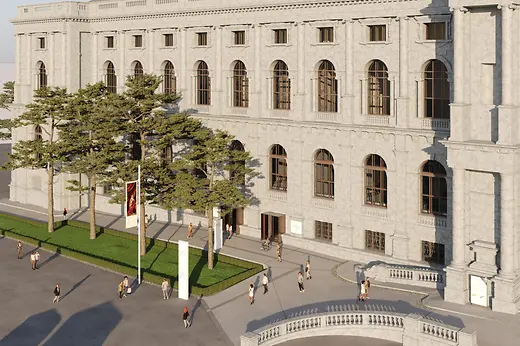
Due to the historic architecture of the Ringstraße building, there is currently no accessible main entrance for museum visitors. Accessible entry is only possible with assistance via the inner courtyard. Within the museum, freedom of movement is generally ensured. However, tactile floor wayfinding and tactile elements are missing, and the visibility of individual displays needs improvement.
Visitors with disabilities are limited in their independence when entering and leaving the museum and depend on assistance. The “Remastering KHM” project is set to change this fundamentally.
The Project: Remastering KHM
Planning & Implementation
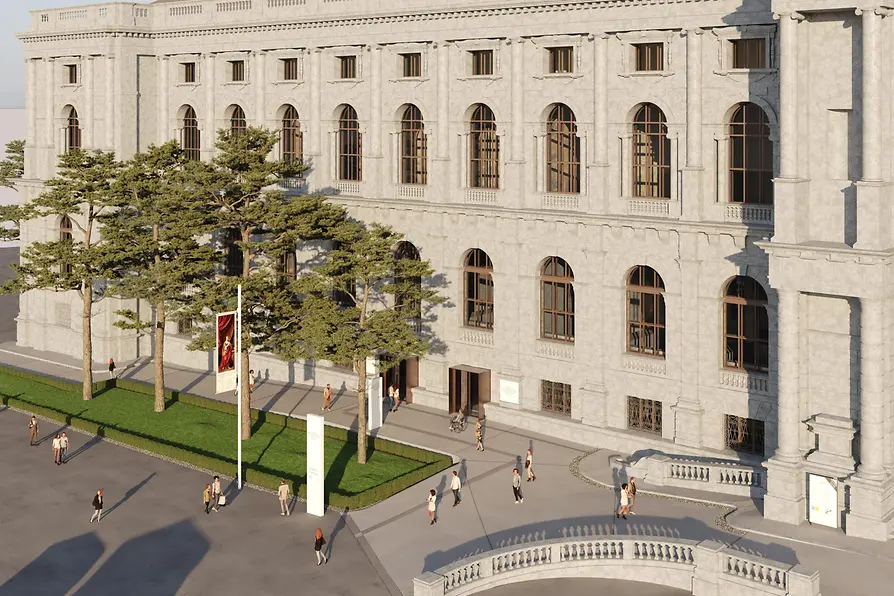
The path to the renovation has been long: a first feasibility study was produced in 2018, followed by modular further planning in 2020/21. A Europe-wide tender for planners was held in 2024. The winning architecture firm is developing the renovation and extension through to construction readiness. Completion of the plans and submission of the building application are scheduled for autumn 2026. A specific construction start date has not yet been set.
What is specifically planned:
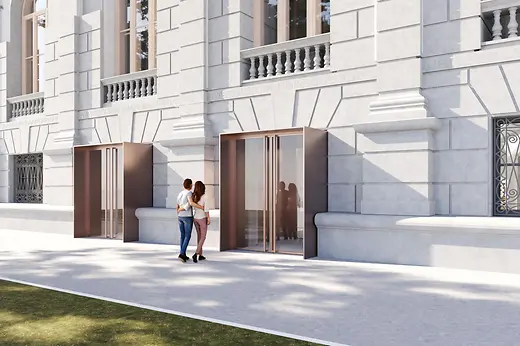
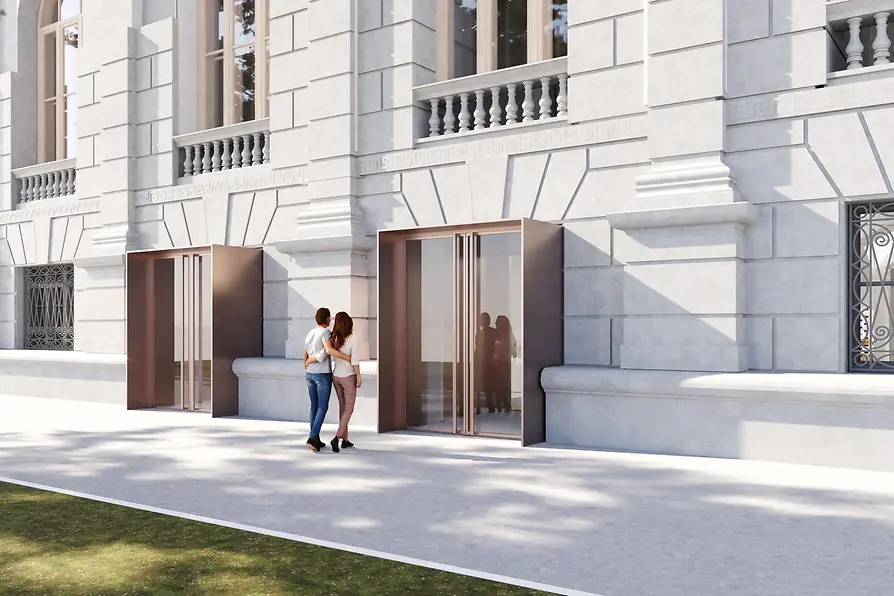
New accessible entrances at the main building
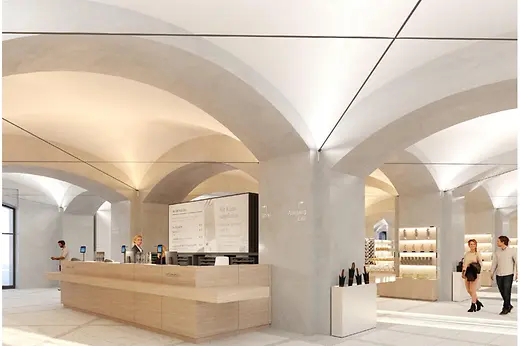
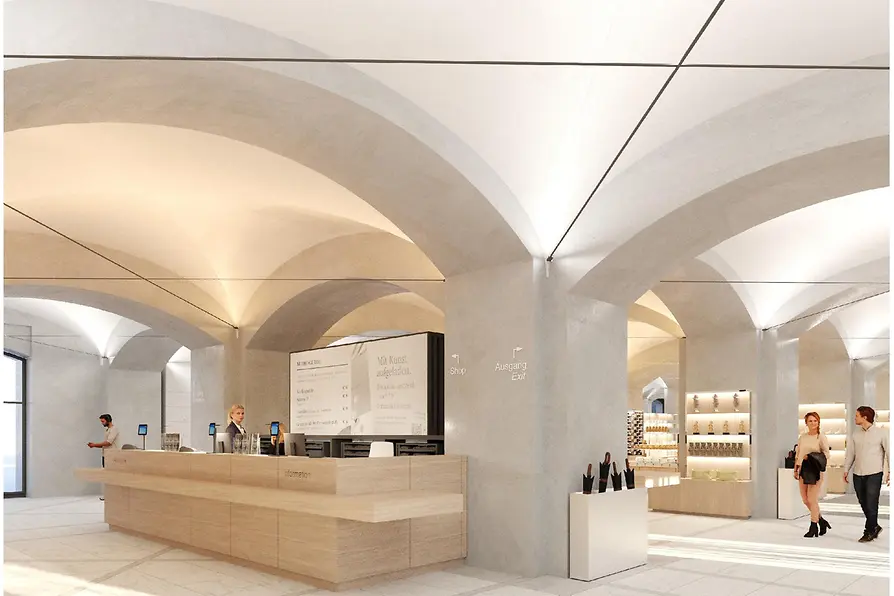
Accessible ticketing and information areas
Accessible cloakrooms and restrooms
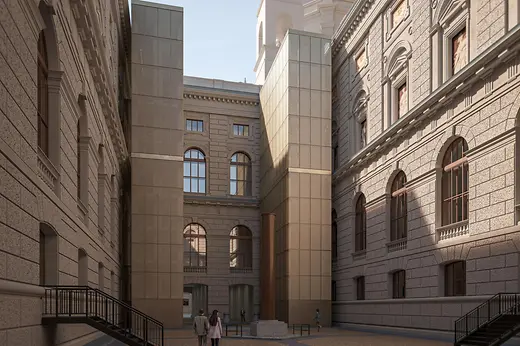
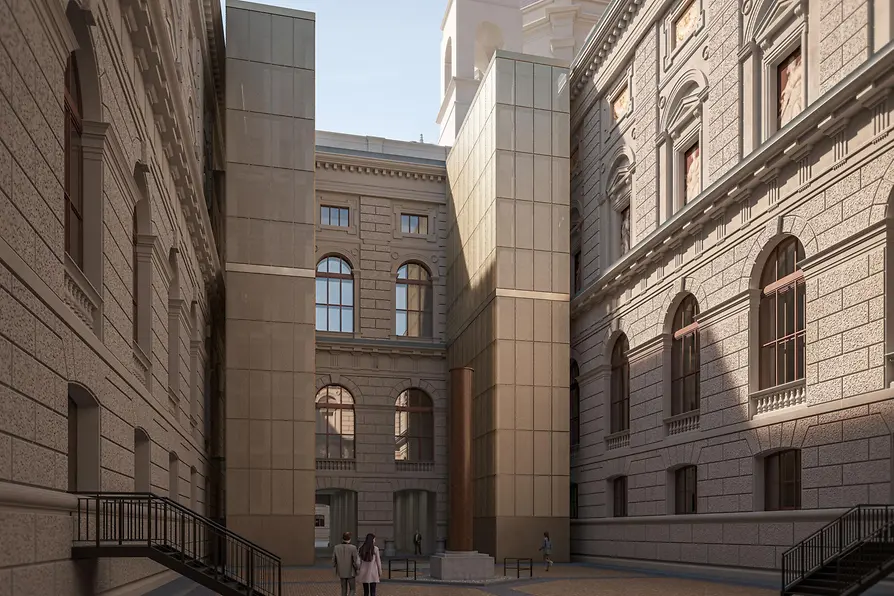
New additional elevators
New emergency stairwells
Regular museum operations, including accessible access, will be maintained throughout the construction period.
Heritage Conservation & Accessibility
How can they be Reconciled?
The KHM is a listed building, a challenge shared by many Viennese cultural businesses and historic properties. Experience from the planning process shows that there is no universal solution. Every listed property has to be treated individually.
Because of the heritage protection requirements and out of respect for the historic architecture, ideal solutions were not pursued from the outset. Instead, individual solutions were developed step by step to ensure an acceptable and dignified result.
What the collaboration with the Federal Monuments Authority (BDA) made possible
Involving the BDA early, before the tender, created a solution-oriented working relationship. Every measure requires coordination and consideration for the historic fabric. This makes the process more sustainable and ultimately delivers a good result for everyone involved.
Involving Experts and People with Lived Experience
A central lesson from the KHM process: accessibility cannot be achieved alone. Architects, the Federal Monuments Authority, users with disabilities, specialist experts from the Austrian Disability Council, and the museum’s own staff were involved in the planning process from the outset.

Everyone can do something to improve a situation. Perfection should never be a precondition for taking action.
This early involvement helped produce solutions that comply with heritage requirements and are functionally accessible.
Financing & Funding
The renovation is to be financed by the Federal Ministry of Housing, Arts, Culture, Media and Sport and through the KHM’s own funds. Negotiations took place as part of the federal government’s regular budget process.
Important for other Businesses
Operators seeking funding for accessible renovations should approach the BDA and other public bodies early. Specific funding options are available for listed buildings that are not publicly owned.
Impact & Outlook
Once the “Remastering KHM” project is complete, the question “How do I get into the museum?” will be a thing of the past. Enabling visitors with disabilities to act independently is the stated goal, together with a significant improvement to the visitor experience.
The Renovation also Creates Synergies
The entire infrastructure will be adapted to the requirements of a museum visit in the 21st century, raising quality, reputation, and sustainability alike.
In the long term, accessibility is to become a fixed part of the museum’s decision-making culture and be considered in all measures at the KHM that affect visitors and staff.
Recommendations for other Businesses
What the KHM passes on to other Institutions
Analyse gaps and opportunities before planning measures
Seek support and advice from organisations and people with lived experience early
Involve the BDA and the Austrian Disability Council from the outset, not only once the plans are complete
Understand accessibility as a process, not a one-off project
Avoid the most common mistake: assuming that everything can be done quickly and easily, and is then finished for good
Weitere Infos zum Projekt „Remastering KHM“
Parts of this text were summarized, translated and formulated with the assistance of artificial intelligence (AI). The content is based on publicly available documents from the relevant funding and certification bodies and their websites. All content has been editorially reviewed and should be approved by the respective business before publication.