Vienna Press Info – September 2026 Vienna runs: how to combine a visit to the city on the Danube with running
Running in Vienna is a year-round activity. Many of Vienna’s best-known landmarks are located directly on, or close to, the most popular routes used by Viennese runners and visitors alike. In spring and fall, mild transitional weather makes it especially pleasant to log miles. In summer, the best runs are along cool waterways or out on the city’s edge in the Vienna Woods. In winter, it’s simply a matter of dressing a bit warmer. Public transit also makes it easy to cover a few kilometers to and from the routes.
The city’s most attractive running routes
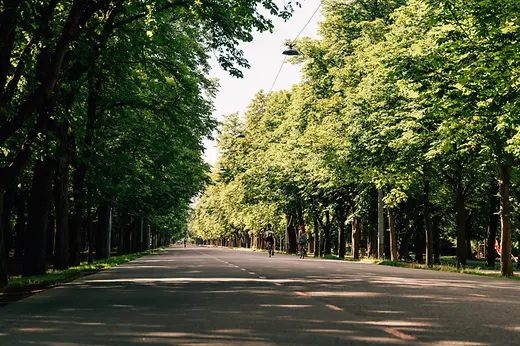
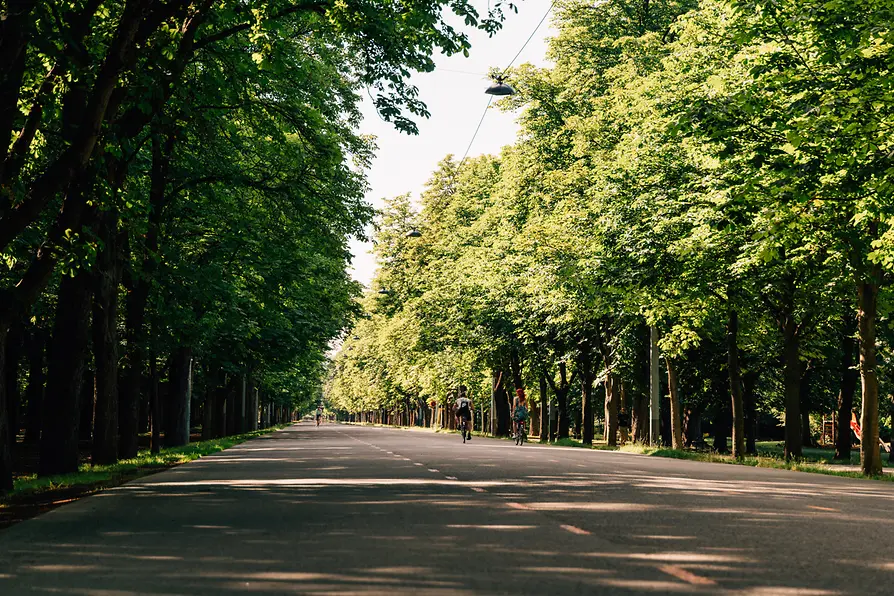
The Hauptallee through the Green Prater (starting at Praterstern U1/U2/S-Bahn station) is the classic choice for carefree jogging. The 4.4-kilometer route, interrupted only once by a street crossing, runs beneath the tree canopy and can be done either on asphalt or on unpaved paths. There are also plenty of ways to extend the route – the Wurstelprater amusement park, the modern campus of the Vienna University of Economics and Business, Viertel Zwei, the wooded sections around the Lusthaus, the meadows of the Green Prater used for play and sports, and much more. What’s more, in 2019, the exceptional athlete Eliud Kipchoge became the first person to run a marathon in under two hours during an unofficial exhibition event held here.
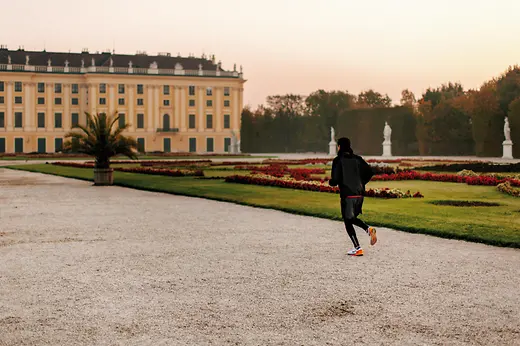
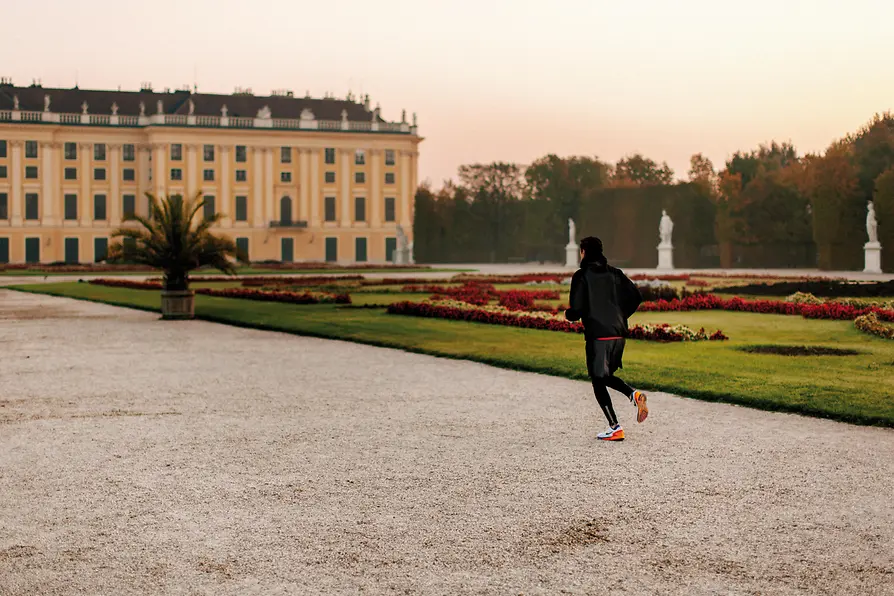
One of Vienna’s most visited attractions is also popular with runners: Schönbrunn Palace Park (U4 stations Schönbrunn or Hietzing), with its long avenues, colorful flower beds, and the climb up the roughly 50-meter hill to the Gloriette, offering fantastic views of the yellow palace. The entire site is also a UNESCO World Heritage Site. Also nearby is the start of the Wiental Walking and Biking Trail, which runs along the U4 subway line, featuring the Art Nouveau stations designed by Otto Wagner along the Wien River. For about five kilometers, this traffic-free path leads to the outskirts of Vienna and the edge of the Vienna Woods.
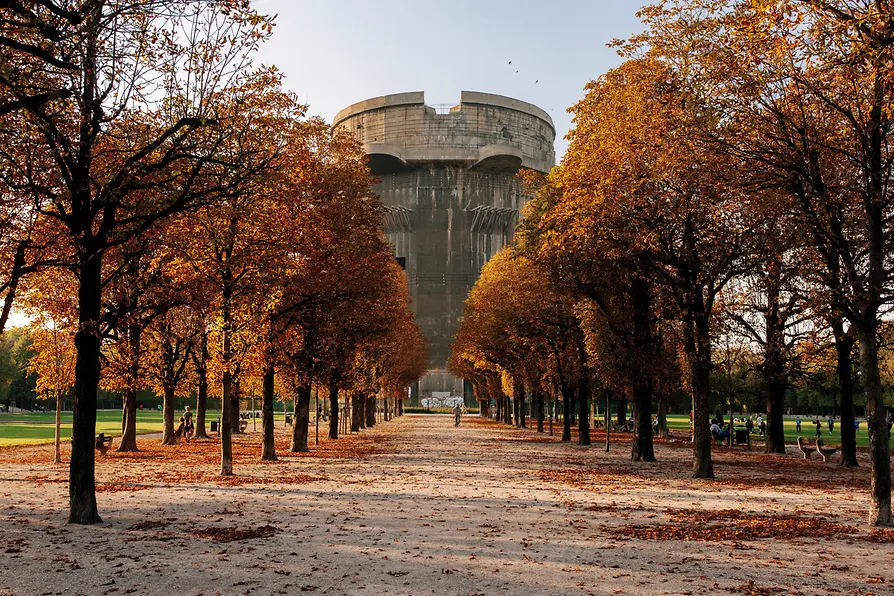
An alternative to Schönbrunn for a run through the park is the Augarten (Taborstraße U2 station) in the 2nd district. It offers a roughly 2.3-kilometer loop through an imperial-style, meticulously landscaped park, passing by sports fields and playgrounds as well as Augarten Palace, which houses the famous Augarten Porcelain Manufactory and the Augarten Porcelain Museum.
Running by the water and in nature
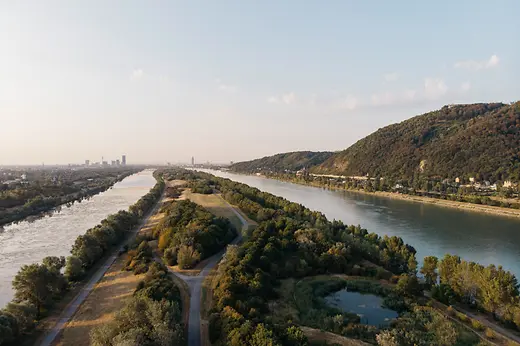
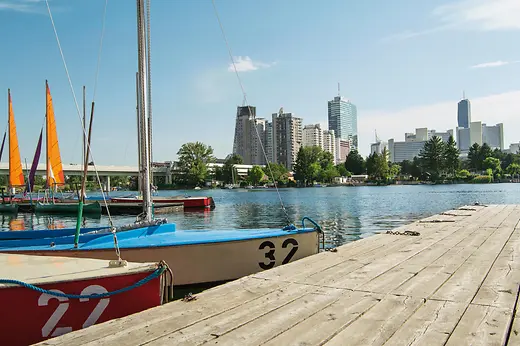
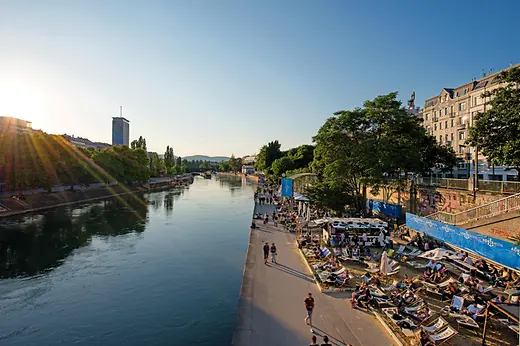
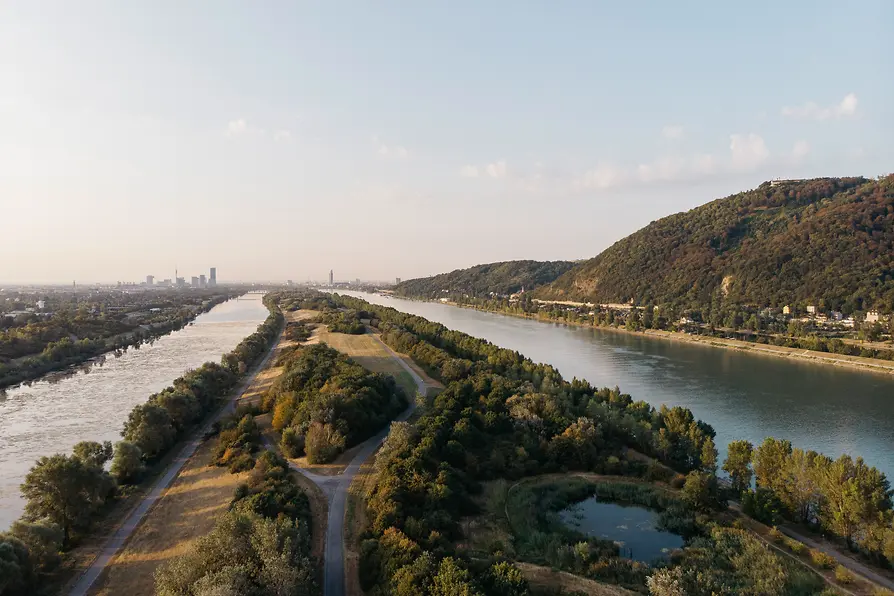
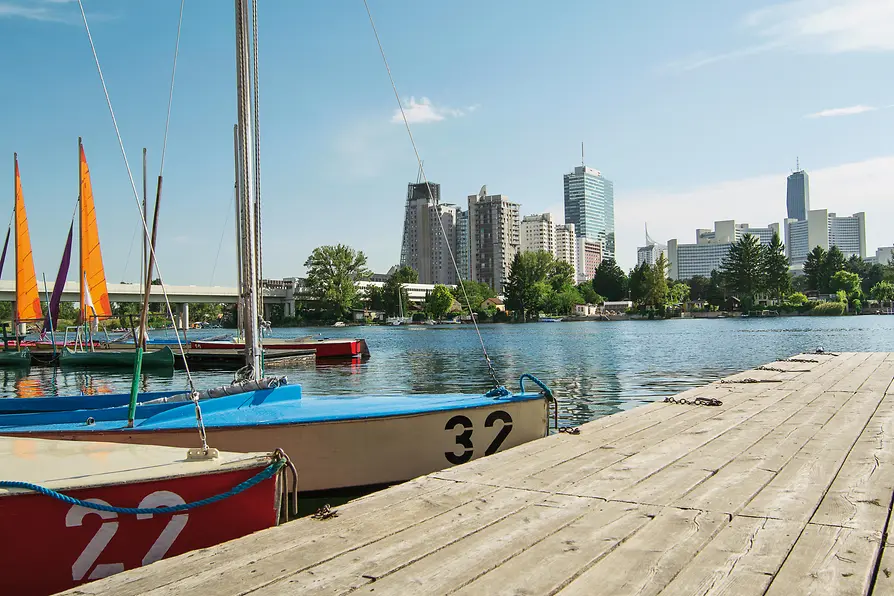
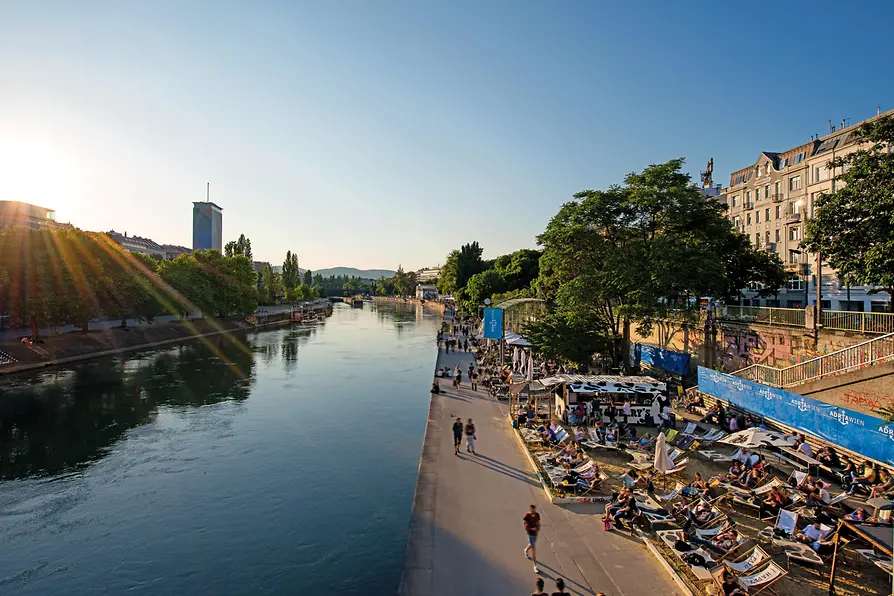
Routes alongside waterways are especially nice on hot summer days. The Danube Island, originally built up as flood protection (U1 station Donauinsel, U6 station Neue Donau, U2 station Donaustadtbrücke), is now Vienna’s largest recreation paradise. Its length (coincidentally) is almost exactly that of a half marathon (21.1 kilometers). The roughly six-kilometer path along the Old Danube impresses with views of the Kaisermühlen skyline, including the United Nations Office at Vienna (UNOV) and the DC Tower, Austria’s tallest building. The route runs between the subway stations Donaustadtbrücke (U2), Alte Donau (U1), and Neue Donau (U6). The Danube Canal in the city center can also be run for around ten kilometers with different entry points, although runners are usually exposed to direct sun here.
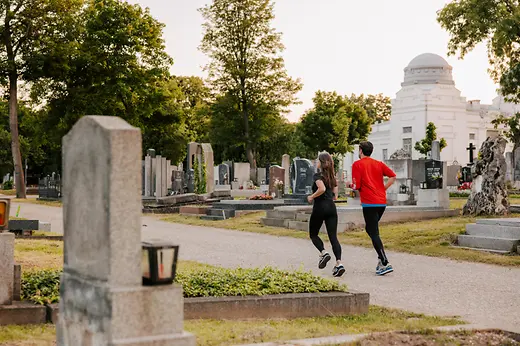
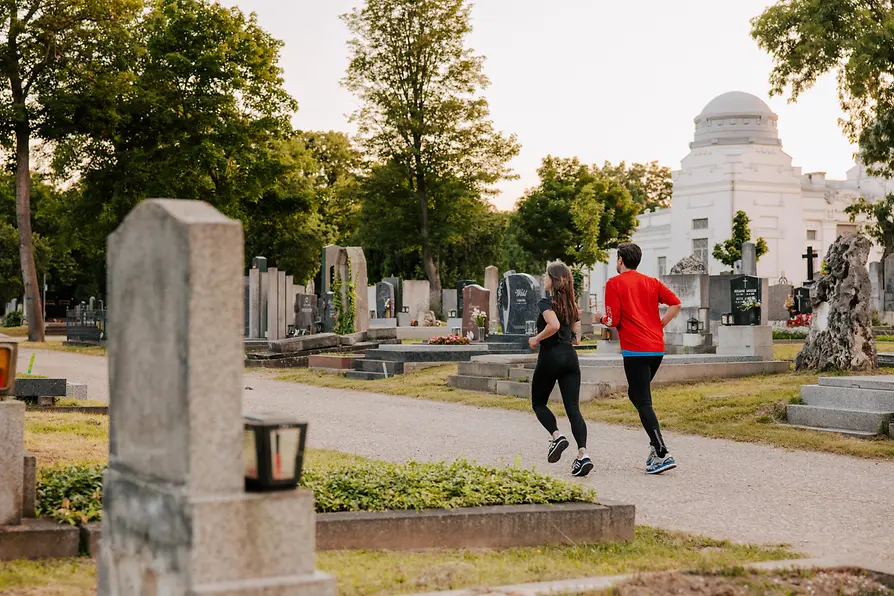
Two of Vienna’s most unusual running routes lead through Vienna Central Cemetery in Simmering, which is also among the largest in Europe. The two officially signposted loops (two and five kilometers) are unique among Europe’s cemeteries. They start at Gate 2 (streetcar lines 11 and 71). Along the way are an imposing Art Nouveau church, natural cemetery areas, and many notable graves, such as those of Johann Strauss, Ludwig van Beethoven, and Falco.
If you want to add some elevation gain, you can also tackle Vienna’s City Hiking Trails at a running pace. No. 1 through Vienna’s vineyards up to Kahlenberg (484 meters) and Leopoldsberg (425 meters), No. 2 to Vienna’s highest point, Hermannskogel (544 meters), and No. 4 with the highlight of the Jubiläumswarte observation platform offer added tourist value. The latter also allows for a short detour to an Art Nouveau highlight that, despite its outlying location, is on many travel itineraries: Otto Wagner’s Church at Steinhof with its iconic golden dome. The City Hiking Trails are also well connected to the bus and streetcar network.
Info on the Vienna City Hiking Trails (https://www.wien.gv.at/freizeit/stadtwanderwege)
Sightrunning – guided running tours through the city
At roughly 5.3 kilometers in length, Vienna’s Ringstrasse encircles the Inner City. Thanks to its magnificent landmarks – such as the Vienna State Opera, the Burgtheater, the Austrian Parliament, Vienna City Hall, the Hofburg, and the University of Vienna – it is one of the city’s absolute highlights, and therefore the perfect way to combine sightseeing with running. Those who would rather explore the Ringstrasse with local insight will find several providers of guided running tours in Vienna.
Here’s a selection:
History Run | Rebel Tours (https://www.rebeltoursvienna.com/sport)
Vienna Sightrunning (https://www.vienna-sightrunning.at/)
Run and See (http://ruthriehle.at/runandsee/)
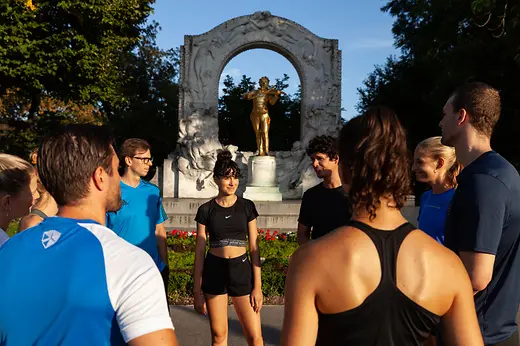
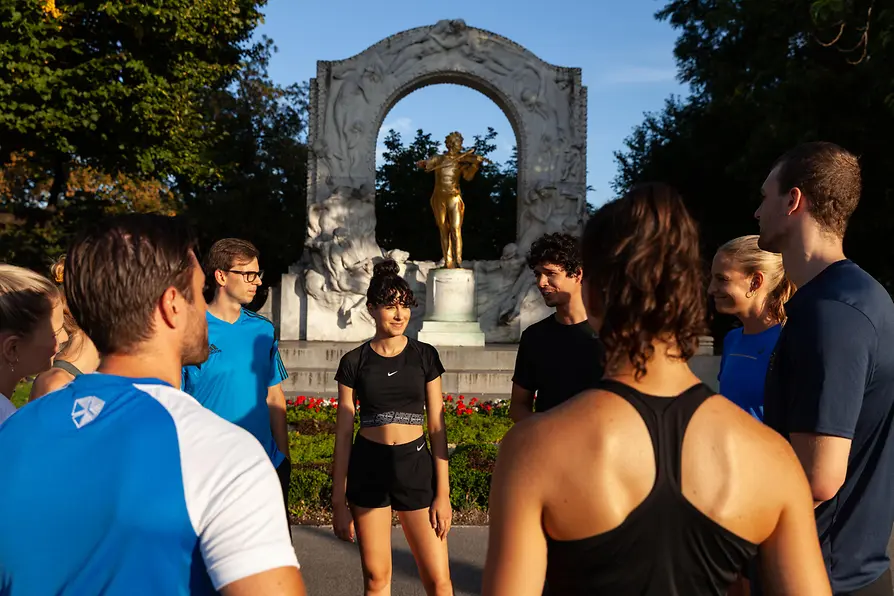
Running clubs have also become established in Vienna’s cityscape. Groups of all sizes meet regularly to go running together – some even bring their own music – but in every case, they do so with enthusiasm and a love of exercise, which also inspires visitors to Vienna to join in.
Here’s a selection:
Early Bird – Various runs or workouts every weekday starting at 6:30 a.m. (https://viennatrailrun.at/)
Weekly Long Run – 100 minutes and up (https://www.wemove.at/weekly-long-run/)
Run and Roast – Some runs end at a rotating selection of coffeehouses (www.instagram.com/runandroast.vienna)
Running Late Athletes – women-only, every Saturday at 9:30 a.m. (https://www.instagram.com/runninglateathletes)
Max Brown Running Club – Exclusive for hotel guests, led by the hotel manager himself (https://maxbrownhotels.com/de/7th-district-wien/)
Many people also use these community runs as preparation for races.
Over 100 running events in Vienna
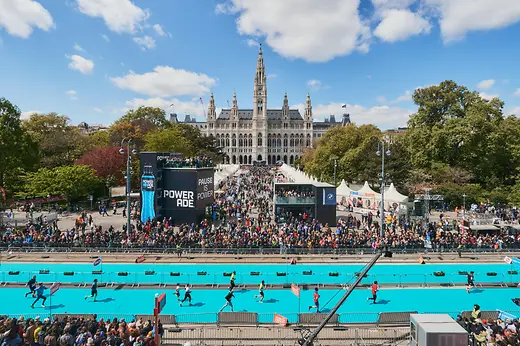
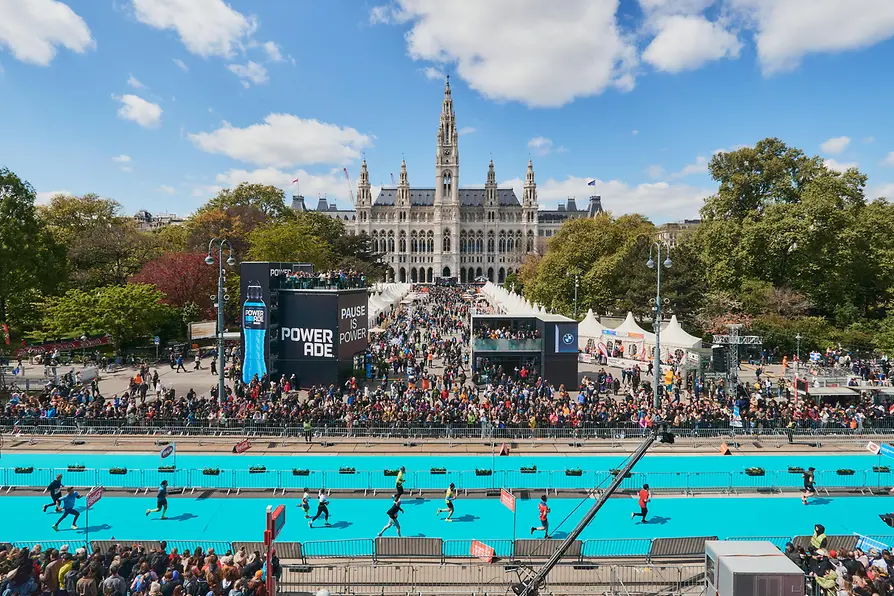
Vienna’s running calendar is packed and diverse, offering exciting events for running tourism. The Vienna City Marathon (https://www.vienna-marathon.com/) is Austria’s largest running race and set a new record in 2026, with nearly 50,000 participants across various events. The Vienna Women’s Run (https://www.oesterreichischer-frauenlauf.at/en), with more than 31,000 runners, is Europe’s largest women-only running event and follows the Hauptallee through the Green Prater. The Nightrun (https://www.viennanightrun.at/) takes participants around the Ringstraße – but in an unusual, nighttime atmosphere. Austria’s tallest building, the DC Tower, is climbed in a short but extremely grueling stair-climb race (https://dctowerrun.com/) - 1,412 steps up to the rooftop terrace at a height of 220 meters. Trail running fans will get their money’s worth at the Vienna Trailrun (https://viennatrailrun.at/), with its three routes of different lengths (7.5, 16, and 24.7 kilometers) through the Vienna Woods. If you would rather walk, the Mammutmarsch (https://mammutmarsch.de/50-km-marsch/mammutmarsch-wien/) lets participants march either 30 or even 50 kilometers through Vienna.
Vienna’s specialty shops offer high-quality gear for every type of running. They offer personalized consultations, including foot and video running style analysis, to help athletes enjoy training sessions that are pain-free and as comfortable as possible.
Here’s a selection:
Tonys Laufshop (https://www.tonys-laufshop.at/)
Wemove Runningstore (https://www.wemove.at/)
Laufsport Blutsch (https://laufsport-blutsch.at/)
Download print-ready version
Download print-ready version
Download print-ready version
Download print-ready version
Download print-ready version
Download print-ready version
Download print-ready version
Download print-ready version
Download print-ready version
Contact
Matthias Schwindl
Media Relations
+43 1 211 14-361
matthias.schwindl@vienna.info