Vienna Press Release – December 2025 The Vienna Tour de Toilette
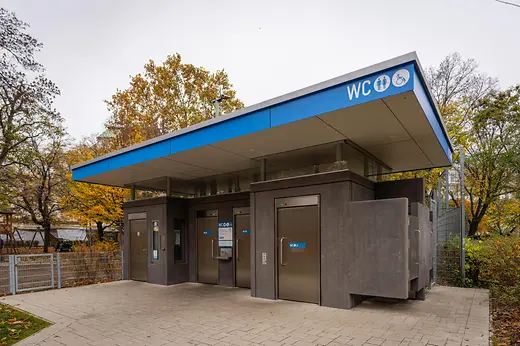
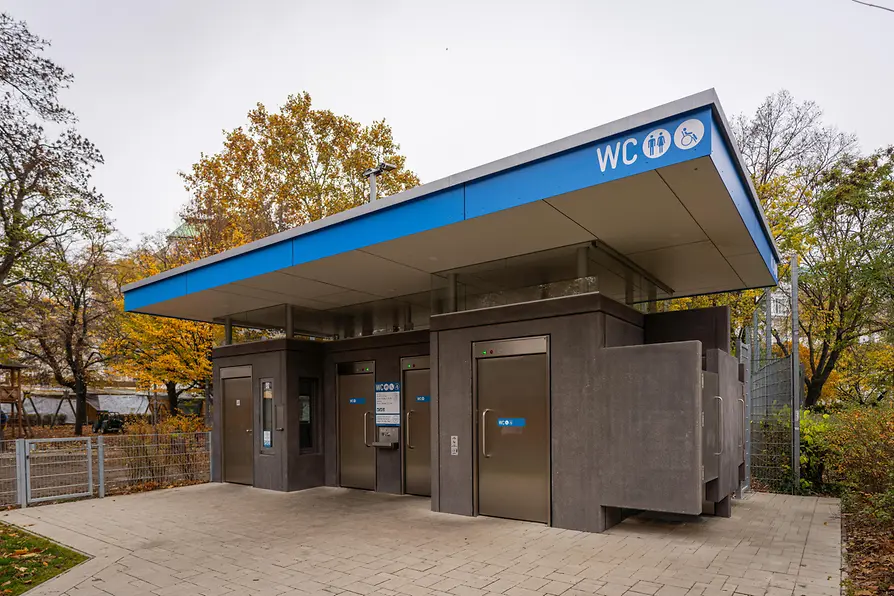
There are currently 167 public restrooms in the city of Vienna alone. About 83% of them are free to use. At 27 busy locations, servicing and cleaning staff are on site during operating hours. Two facilities are cleaned automatically after coins are inserted and the facility is used. Vienna generally invests heavily when it comes to modernization and the maintenance of historic facilities, and repeatedly puts money into new constructions at existing and new locations. A modular approach to construction has been in place since 2015, utilizing precast concrete elements with anti-graffiti coatings, stainless steel structures, some with external washbasins, accessible modules and, where possible, green facades. All of these elements were also used in the new facility in Resselpark, which opened in July 2025. Other publicly accessible facilities can be found in the train stations of Wiener Linien and the Austrian Federal Railways, countless museums, public universities, cemeteries, parks such as the Schönbrunn Palace Gardens, the Vienna Prater and the Danube Island.
Unusual restrooms
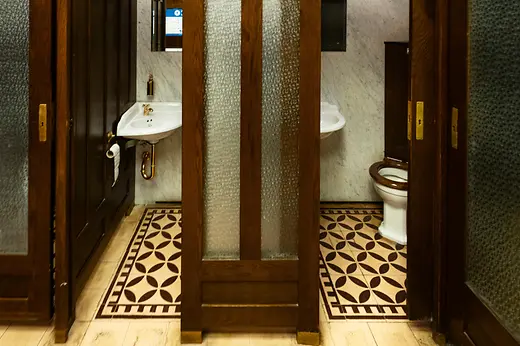
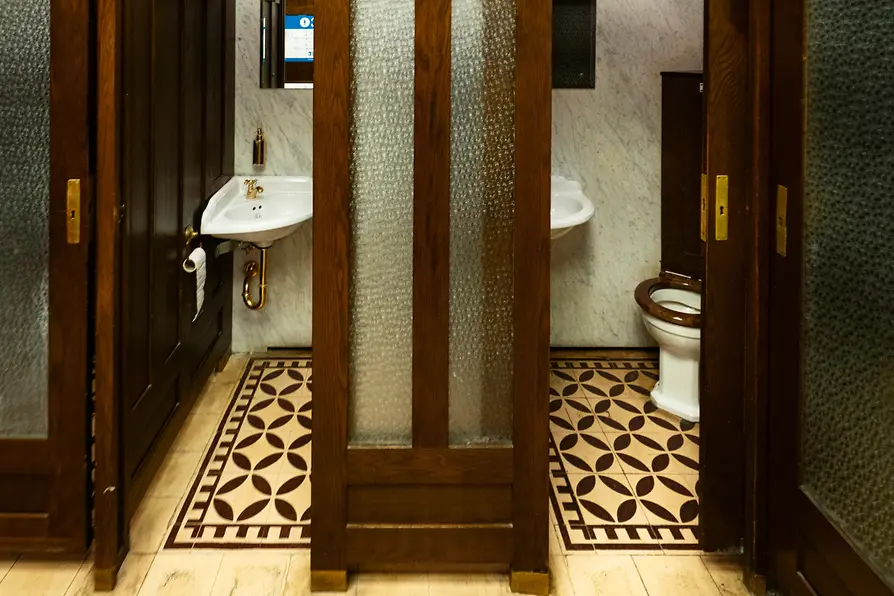
Some facilities have become attractions in their own right. The underground public restroom on the Graben opened in 1905 and is protected as a historic monument for its Art Nouveau design. It was originally meant to be built at Stephansplatz, but objections from church authorities led to the site being moved by about 300 meters. High-quality materials were used, such as oak and teak, brass fittings and polished glass panes. Despite some modernization, the historic character has been preserved. Individual hand-washing sinks are, as was usual back then, even installed inside the stalls.
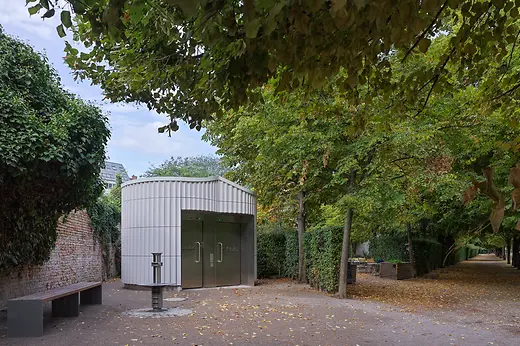
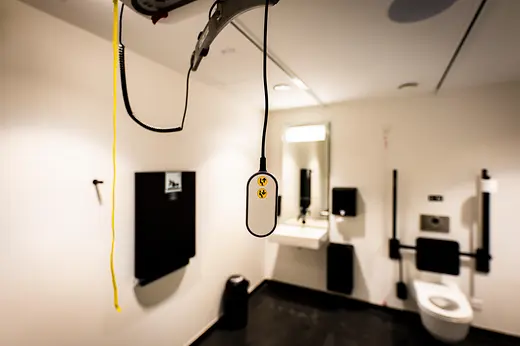
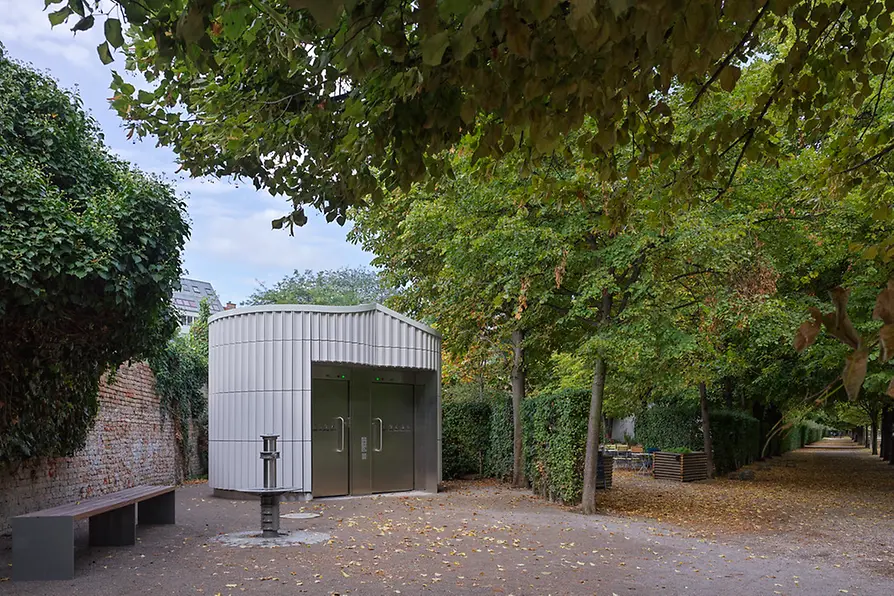
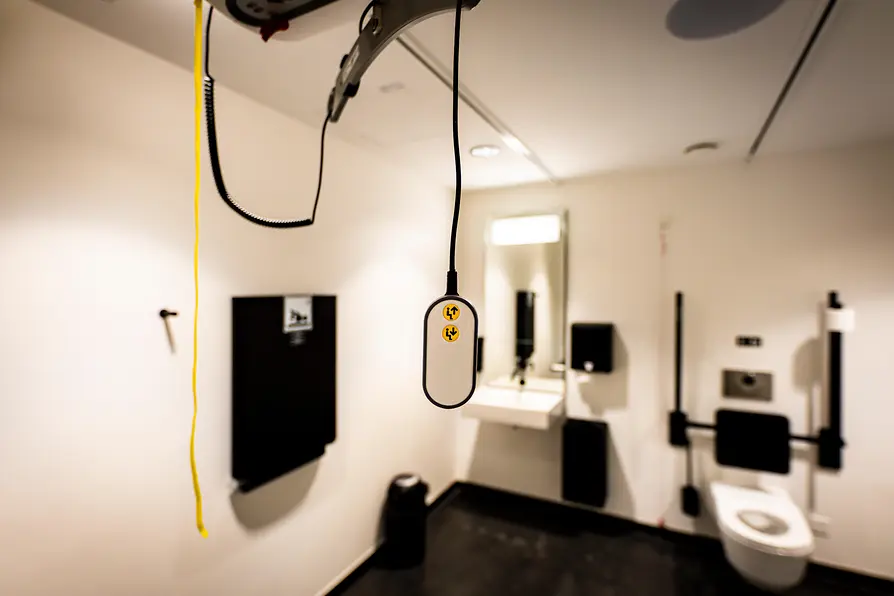
Vienna’s restrooms also fit in with their surroundings. For example, a restroom unit on the popular Danube Canal is adorned with high-quality graffiti art, because legal graffiti walls for street artists line this stretch. A clever owner of a souvenir shop opposite the Hundertwasser House in Vienna’s 3rd district has designed his publicly accessible restroom in the typically colorful Hundertwasser style. The new facilities opened in October 2025 in Augarten were designed by the architectural firm Zottlbuda and blend harmoniously into the Baroque garden ensemble. And the Wien Museum has designed its “Toilet for All” to be extremely accessible, even integrating a ceiling hoist and an adult changing table. This facility is open during museum opening hours and is free for visitors even without a ticket.
From Vienna to the World: the Path to Sanitary Innovation
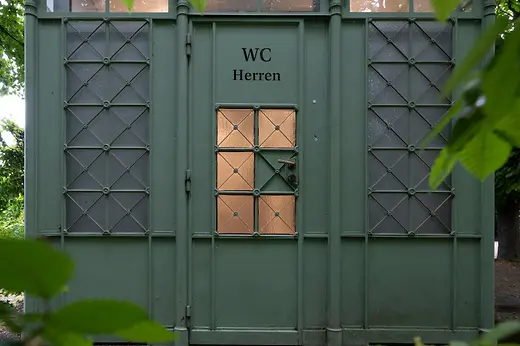
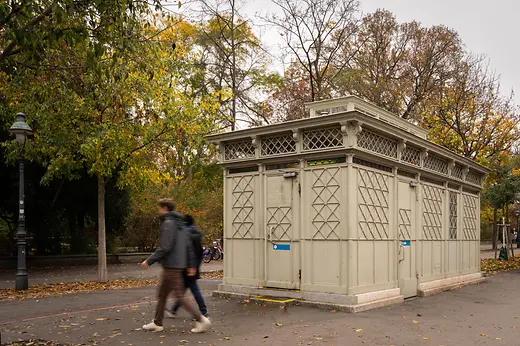
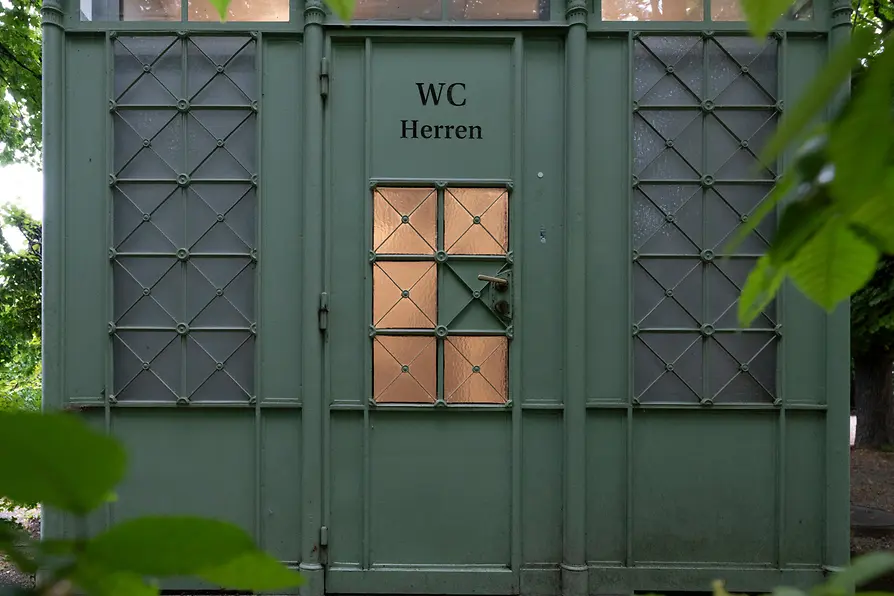
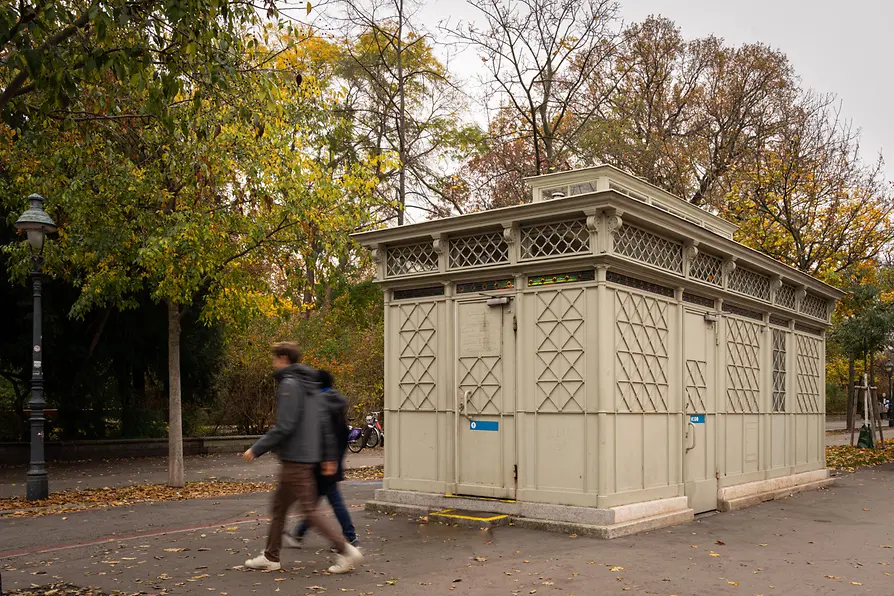
Before the first public restroom opened in Vienna in 1883, people simply relieved themselves in the street gutter, as was common in other major cities. In the 18th and 19th centuries, people known as Butte carriers offered a mobile service. They wore a wide cloak under which they carried a “Butte”, a wooden bucket, and offered it for urgent needs with a bit of privacy. The Berlin entrepreneur Wilhelm Beetz eventually brought an innovation to Vienna. The first public toilet facility based on his designs was opened in 1883 in what is now the 3rd district, Landstraße. They quickly popped up all over the city. The oil trap developed by Beetz, which drastically reduced odors, was exported worldwide and used in Germany, Turkey, Mexico and South Africa. Even today, several facilities dating from the early 20th century are still in operation in Vienna, with historic exteriors and modernized interiors. They are recognizable by their gray or green metal facades on a concrete base, for example on Vienna’s Ringstraße (Parkring), in the Schönbrunn Palace Gardens and in the Türkenschanzpark. Some screen-style urinal facilities from that era are still in situ, for instance in Auer-Welsbach-Park and along the Alszeile.
Request rights of use from the image owner
Download print-ready version
Download print-ready version
Download print-ready version
Download print-ready version
Download print-ready version
Contact
Helena Steinhart
Team Manager
+43 1 211 14-364
helena.steinhart@vienna.info